The guitar
I couldn’t find.
Solic Arc is an electric guitar I designed and built around the player’s body. This page follows how it got its shape: from other players, a system for drawing bodies, foam prototypes and a workshop.
- Project
- Solic Arc, an ergonomic electric guitar
- Work
- Research · Product design · Physical prototyping · Fabrication
- Role
- Solo project, designed and built by Anshul Suthar
- Time
- 3 months · 2025
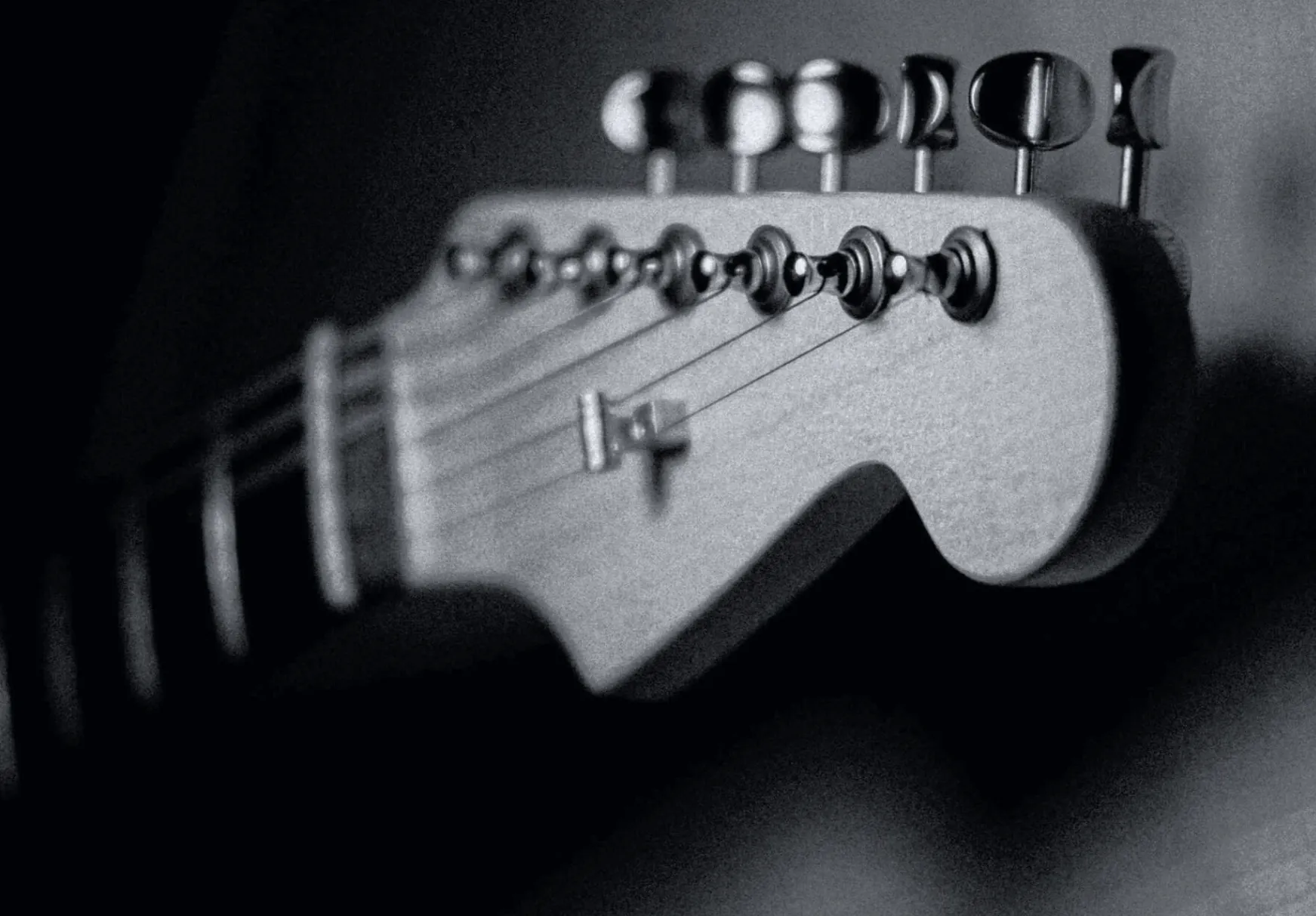
The headstock of the finished guitar. The rest of it waits until the end of the page.
How do you make an ergonomic guitar without losing the heritage, familiarity and character that make people want a traditional one?
When I was young I heard how Brian May built the Red Special with his father while still a teenager. A guitar made at home became one of the most recognisable instruments in rock, with a sound and an identity of its own.
That stayed with me. A guitar someone makes for themselves can end up with an identity nobody else could have given it.
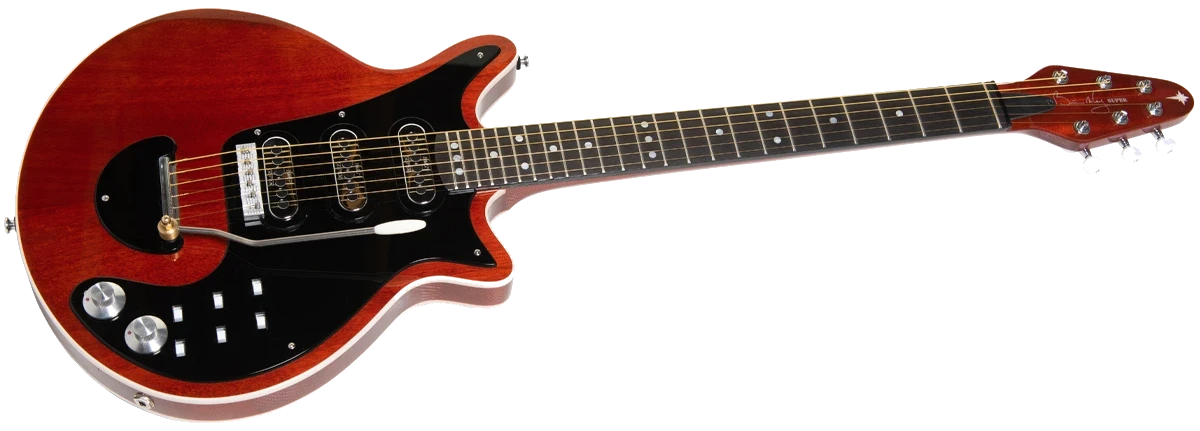
The Red Special. Reference image from my research board.
Three guitars. None of them felt like mine.
I had owned three guitars and never felt properly connected to any of them. They didn’t feel right in my hands.
What if I designed a guitar around the way I actually play?
A guitar that fits one person is a custom order. I wanted something that could work for other guitarists too, and maybe become a product one day.
So the project couldn’t start with my hands. It had to start with other players, and with the guitars they already love.
The contradiction
Traditional shapes carry decades of familiarity. Ergonomic guitars are shaped around the body instead. Each gives up something the other keeps.
- Gives
- Familiarity, a visual language people recognise, proven proportions, a musical and cultural history.
- Costs
- Compromises in weight, balance, posture, body contact and fret access, sitting or standing.
- Gives
- Lighter bodies, deep contours, balance, shapes built around the player.
- Costs
- Often the familiar outline, and with it much of the identity of a guitar.
Heritage bodies stand upright on their axes. Ergonomic bodies tilt them and fan them out.
| Tilt from vertical | Tail | Waist | Horns |
|---|---|---|---|
| Telecaster | 0.0° | 0.0° | −2.6° |
| Stratocaster | −2.0° | 0.0° | −17.1° |
| Les Paul | 0.0° | 0.0° | −11.9° |
| Parker Fly Deluxe | −7.5° | −15.2° | −26.1° |
| Headless design | +28.7° | −11.8° | −19.4° |
Measured from the axes on my research board. Positive values lean the top of the axis toward the tail.
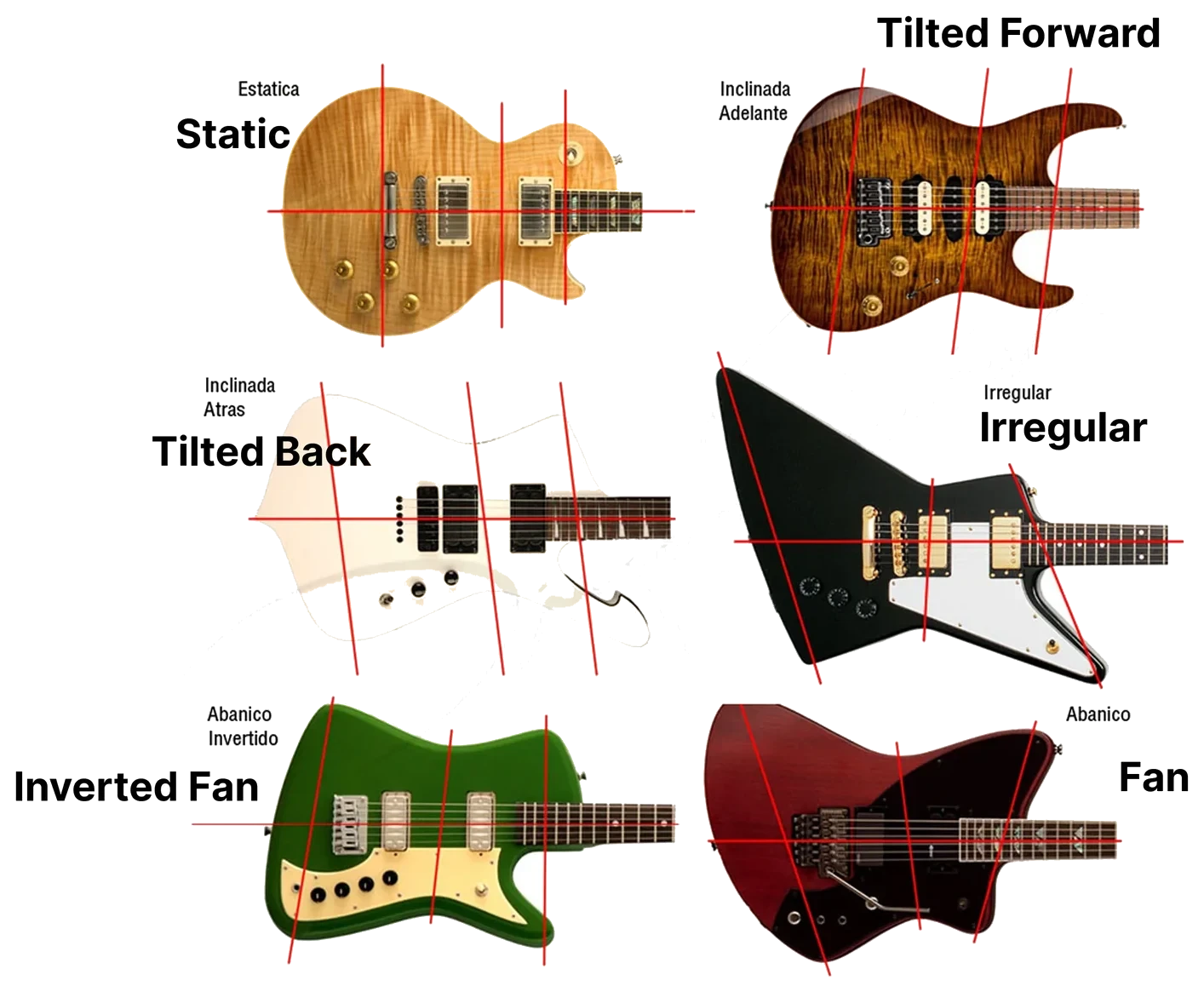
Six body families, sorted by how their axes lean. Classification by Diego Fabián Guitars, collected on my research board.
The axes come from Diego Fabián Guitars. His guide to designing electric guitars draws lines across the body, perpendicular to the strings, and sorts bodies by how those lines lean: static, tilted forward, tilted back, irregular, inverted fan, fan.
He then measures the body’s widths to judge its balance. I didn’t invent this framework. I borrowed it, and later used it to generate my own shapes.
Can we have
both Heritage
and Ergonomics?
What players actually want
Before changing anything, I needed to know what a good guitar already feels like, and what players say when you ask them.
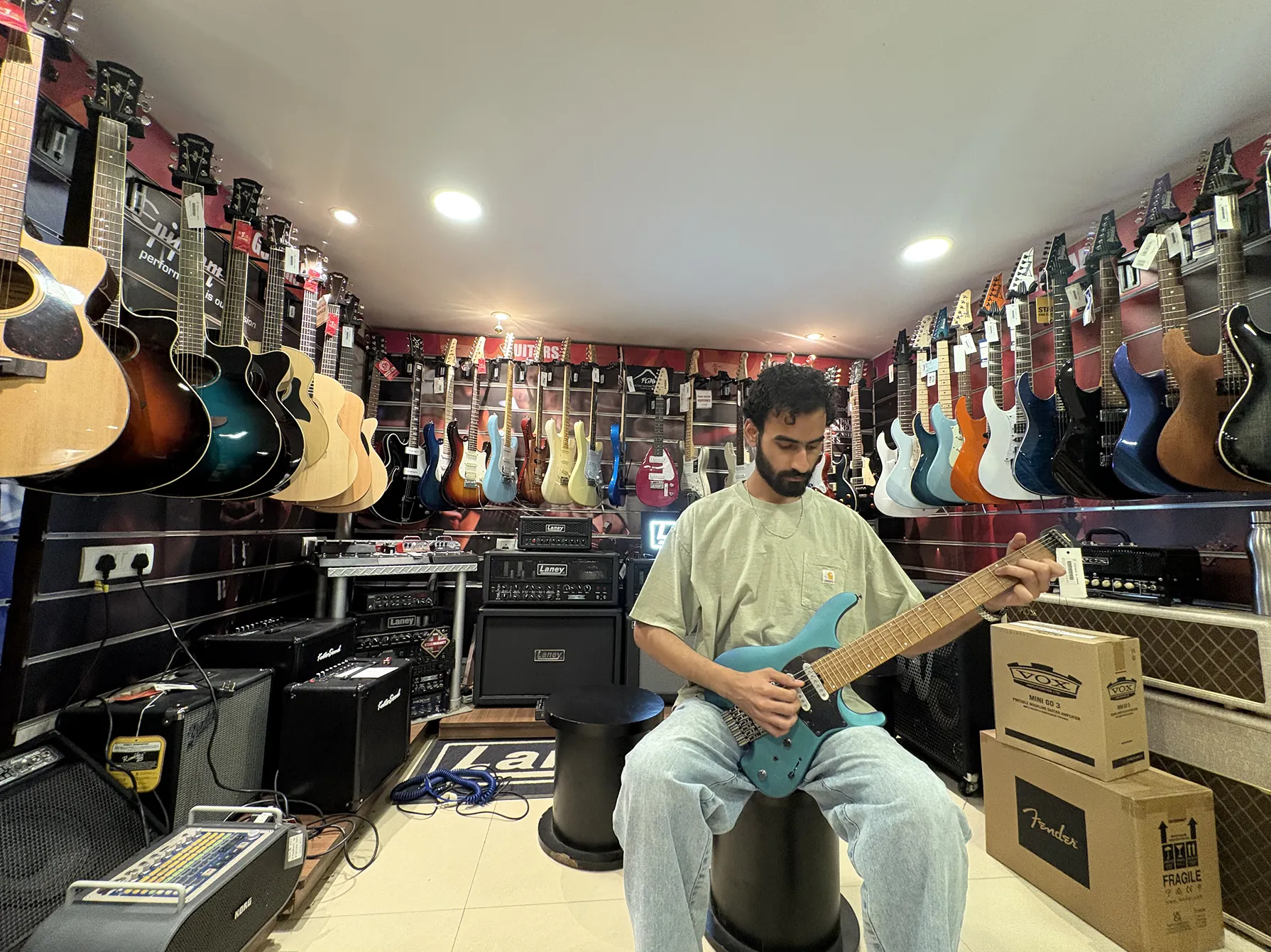
In a music store, with established guitars. These photos are benchmarking. None of them show Solic Arc.
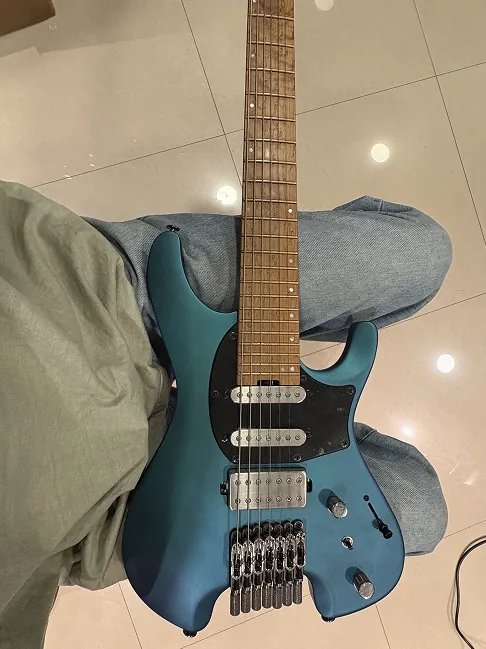
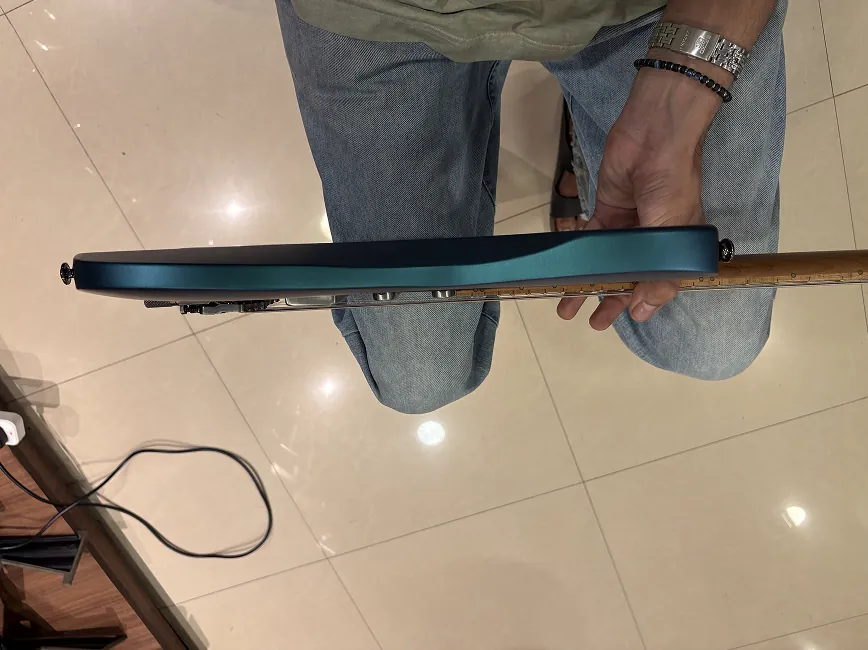
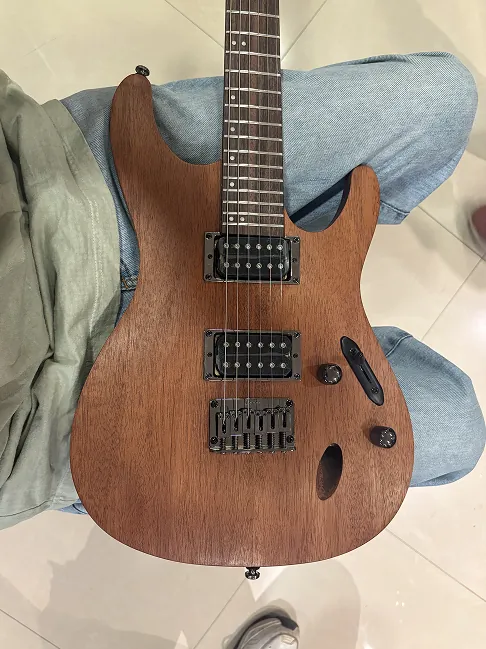
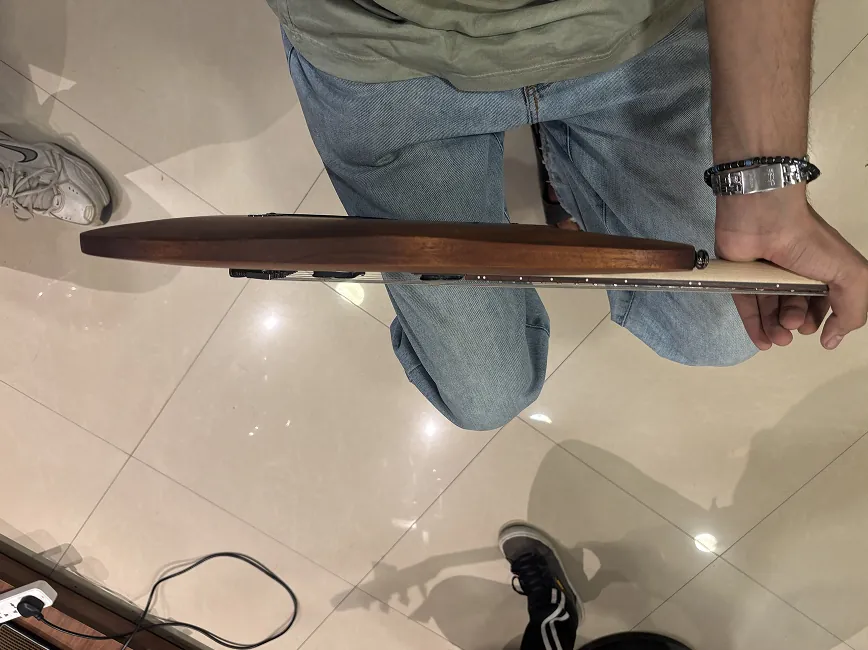
What makes an established guitar feel good, before trying to reinvent it?
I looked at each guitar from above, resting on the leg, and edge-on, the way it meets the body.
- Body proportions
- Contours
- Weight and balance
- Contact with the leg
- Sitting position
- Standing position
- Neck-to-body relation
- Control placement
- Fret access
- Overall feel
Then I went where guitarists talk.
Reddit threads and guitar communities first, then a survey about ergonomics and preferences, then conversations with 15+ individual players.

At a gig I got to talk gear with Bryan Beller, bassist of The Aristocrats: the custom bass he plays, and why he chose it.
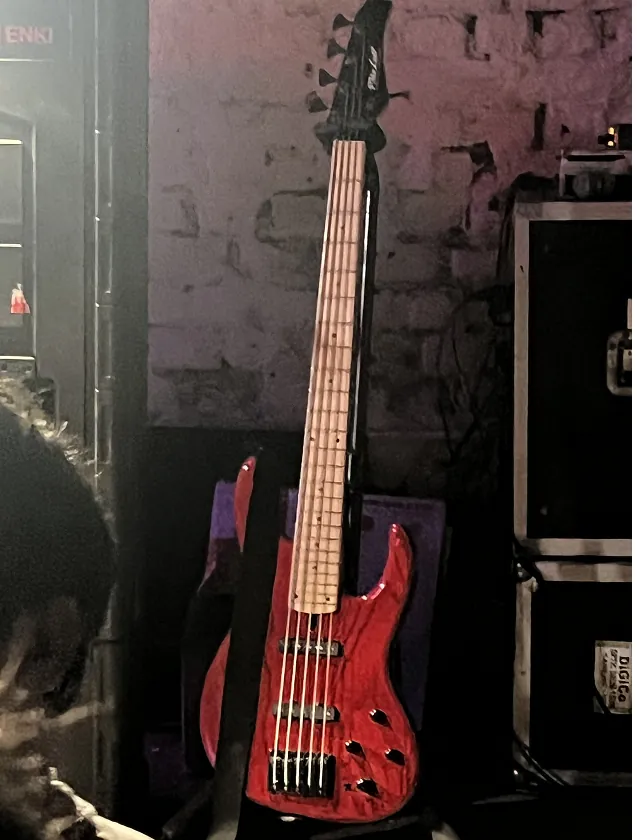
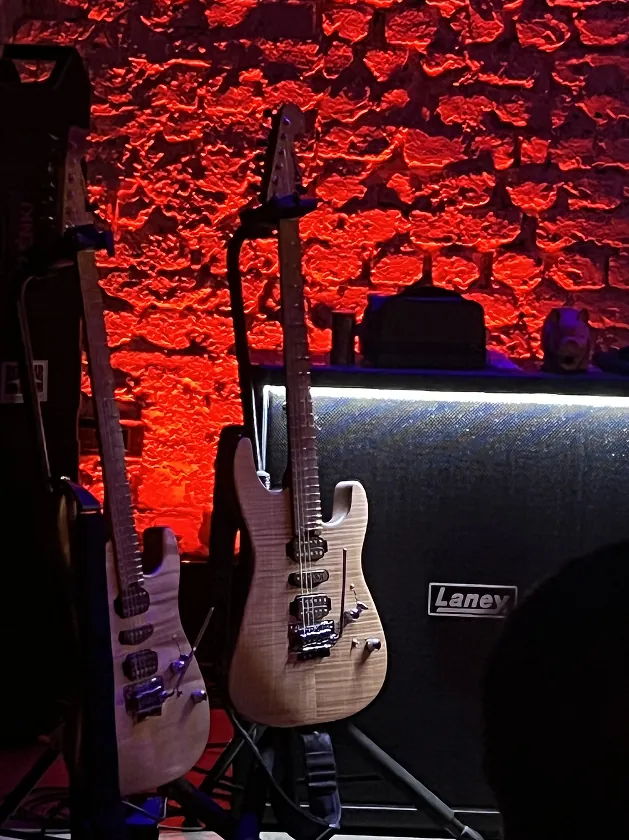
Instruments on stage at the same venue.
- 70Advanced / professional, 5+ years
- 23Intermediate, 2–5 years
- 7Beginner, 0–2 years
- 2Described it in their own words
A dataset weighted toward experienced players: 70 of 102 have played for five years or more.
named an ergonomic problem with their guitar, or a place it hurts them.
Q · ergonomic issues and pain or strain, counted together
- 95 Reported at least one
- 7 Reported nothing
did that and still name heritage guitars as the type they prefer most.
only 2 of the 59 who prefer heritage report no discomfort at all
- 57 Heritage, reports a discomfort
- 45 Everyone else
chose the guitars built to solve it.
Q · “Which type of electric guitar do you prefer the most?”
- 59 Heritage (Fender, Gibson, PRS)
- 26 No strong preference
- 12 Ergonomic
- 5 Artistic / custom
Discomfort is not what decides the guitar.
Almost nobody is comfortable: 95 of 102 named something. That is not evidence that traditional shapes hurt more than the rest — players who prefer ergonomic guitars report problems too, at 9 of 12. What it says is that the discomfort is not what the choice turns on. 57 players carry a complaint and pick the traditional shape anyway; 12 pick the guitars designed to answer it. That gap is where this project sits.
What gets in the way.
- Heavy weight35
- Discomfort while sitting22
- Difficult fret access18
- Uncomfortable body shape14
- Neck dive, unbalanced weight14
- Discomfort while standing9
- No pain40
- Wrist23
- Back22
- Shoulder17
- Neck9
Bars are drawn against all 102 respondents and show the listed options. Players could pick several, and a few wrote their own: fingers, a forearm against the body edge, the thumb hitting the heel, a guitar sliding off the leg. In all, 92 named at least one ergonomic issue and 62 at least one place they feel pain, and 95 named one or the other — the figure above. Ten named no issue and 40 no pain. None of this says traditional guitars cause pain.
82 of 102 answered 3 or higher. The survey gives the scale as numbers only.
- 48 sitting
- 37 both equally
- 14 standing
- 3 picked several
- 71 on the right thigh, traditional
- 21 on the left thigh, classical
- 10 both or other
- 75 yes
- 18 maybe
- 9 no
Most of these players sit. A body has to rest well on either leg, not just hang well from a strap.
The formula from my concept board. It isn’t a universal truth about guitars. It is the bet this project makes.
- Keep
- the outline and language players already trust
- Add
- contour, balance and access where the body meets the player
- Remove
- what makes playing a strain
Functional goals from the same board: a guitar that works as an extension of mind and body; play without limitation; better balance and posture. Keywords: playability, freedom, balance.
Building a language for shape
I wasn’t drawing random guitar shapes. I was building a system for exploring them.
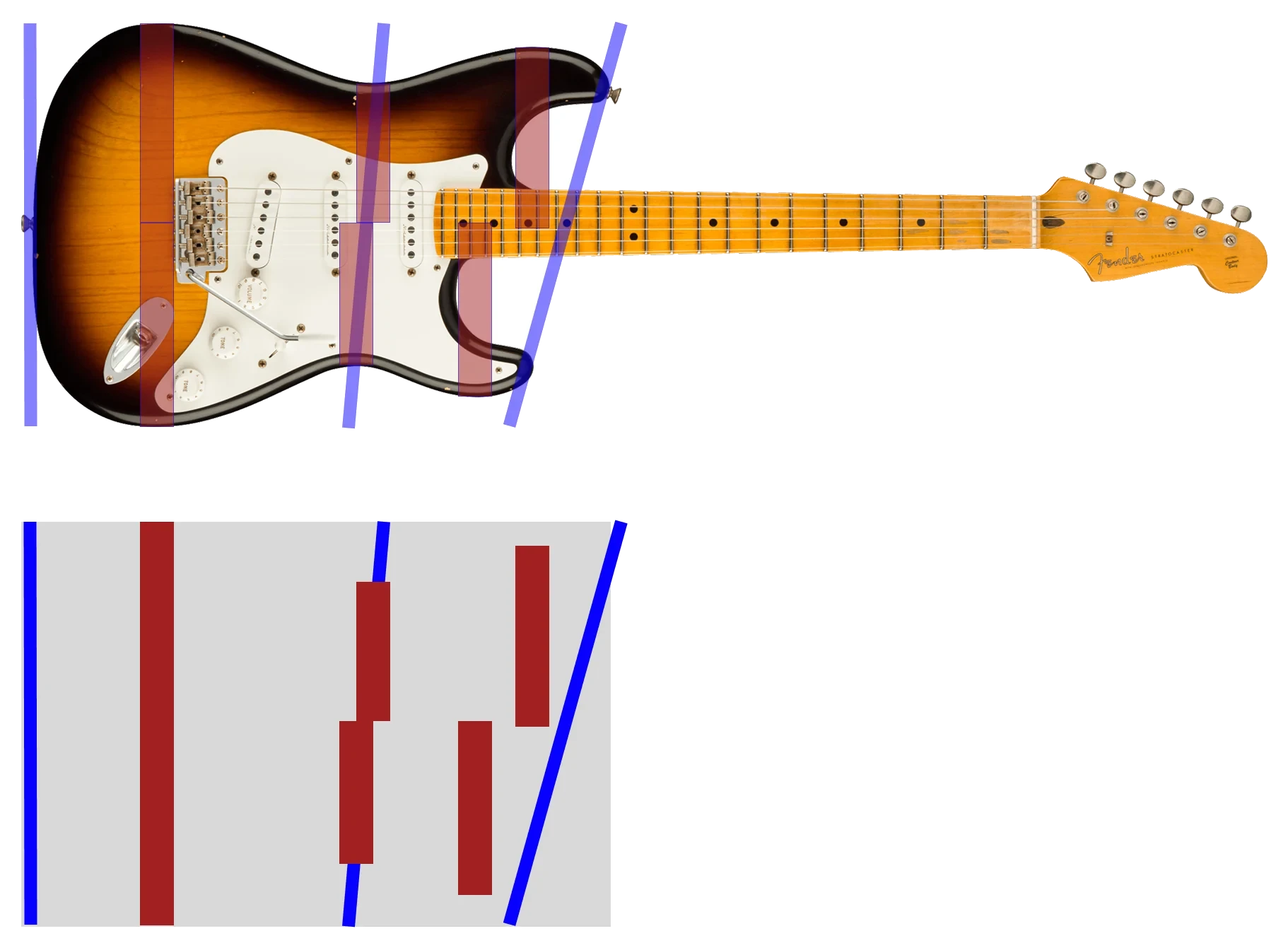
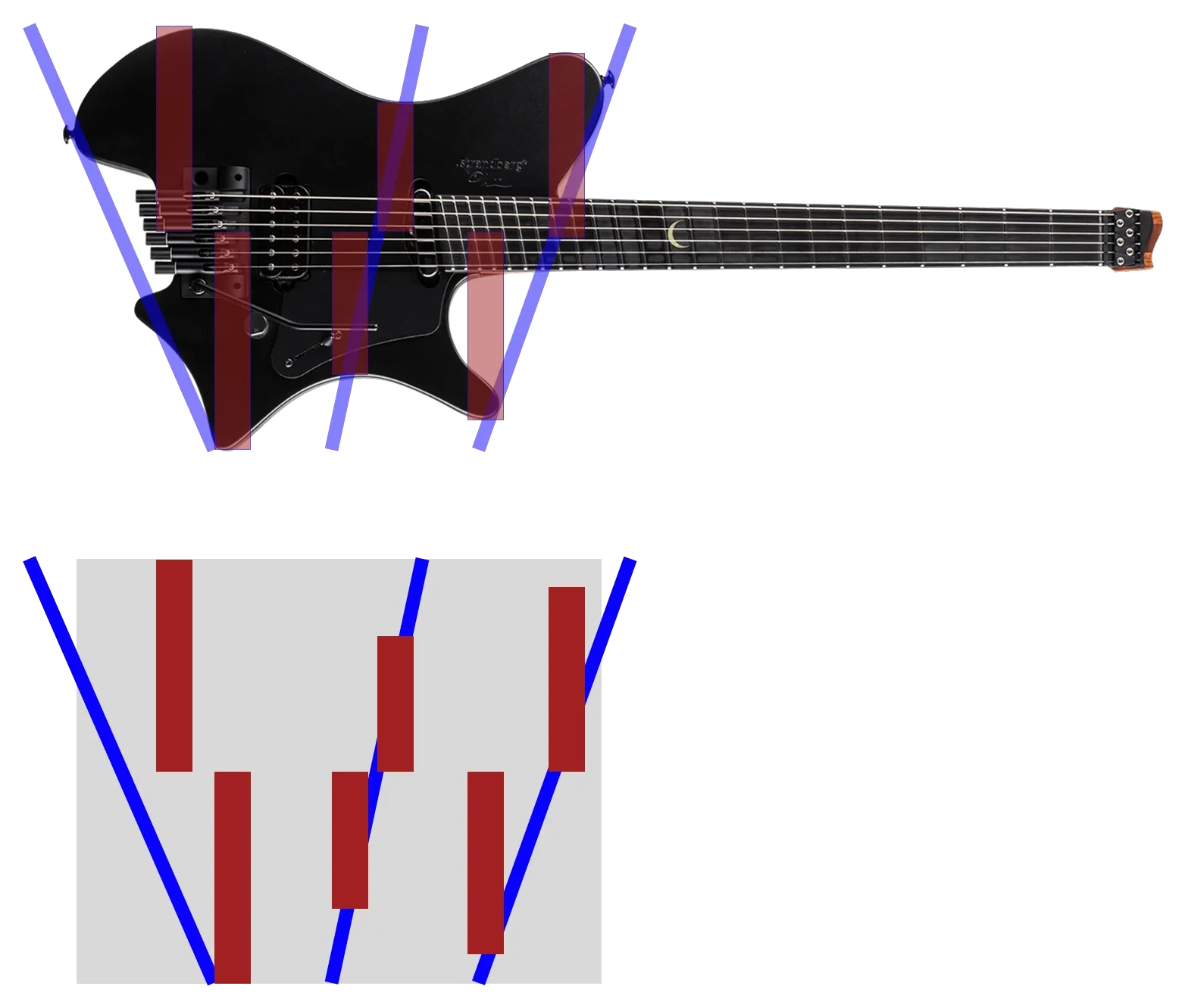
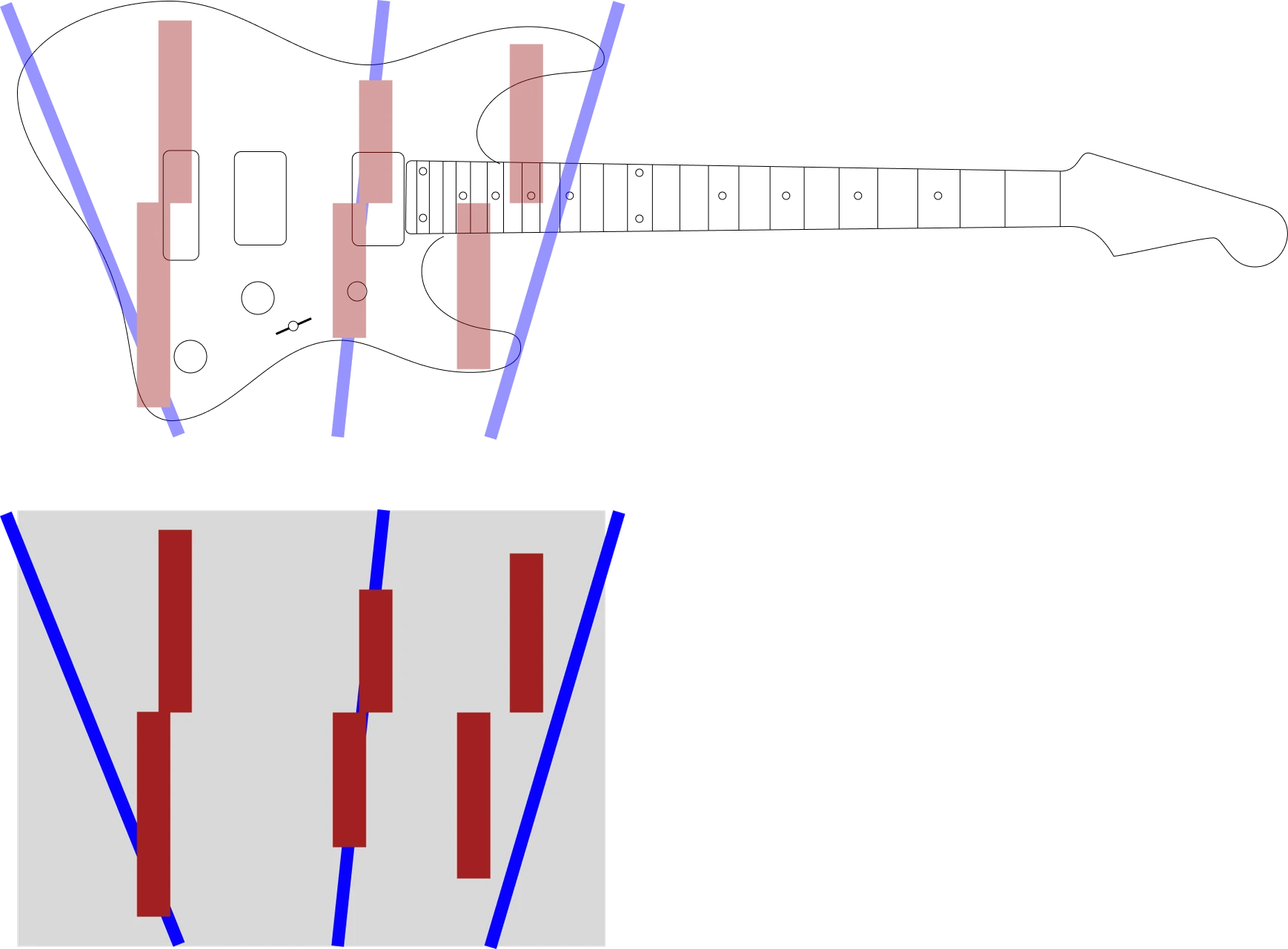
Reference axes across the body, perpendicular to the strings: tail, waist, horns. Their tilt sets how the body leans.
The extrema. Each runs from the centreline to where a curve peaks or dips. Positions and lengths set proportion and balance.
The outline drawn through them. Change a number and the outline changes with it.
First, test the framework on guitars I already knew.
On a Stratocaster and on a headless ergonomic design, the same three axes and six columns capture the character of each body. Then the same framework goes onto my own outline.
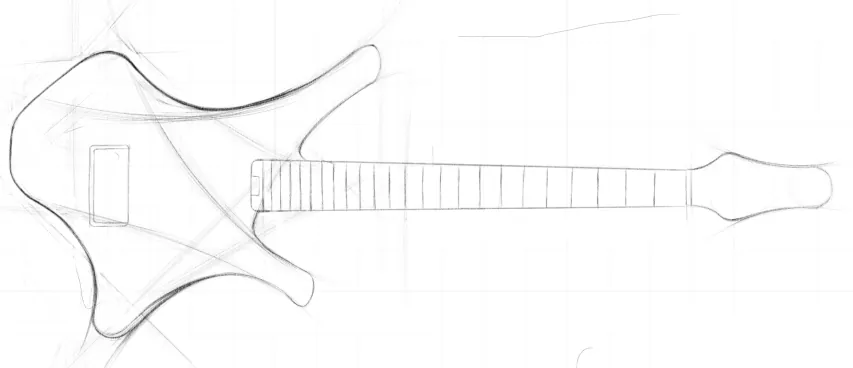
More than ten iterations of sketching, prototyping and testing.
- Version 1early
- Version 3
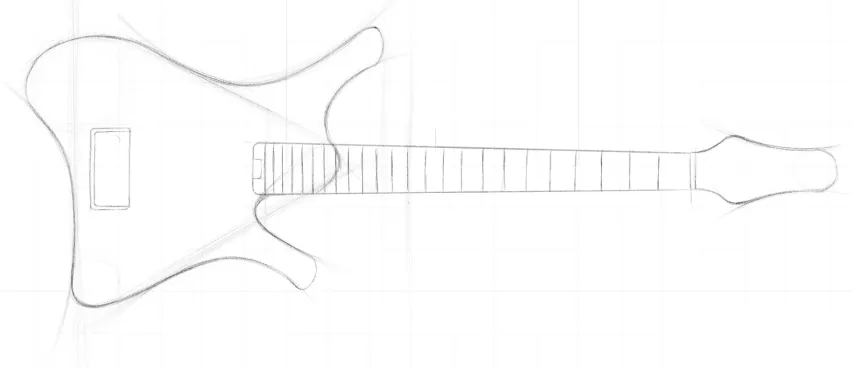
- Version 7
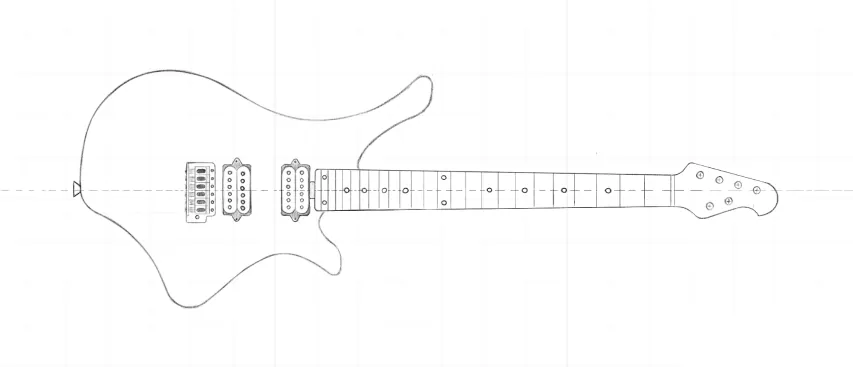
- Version 12late
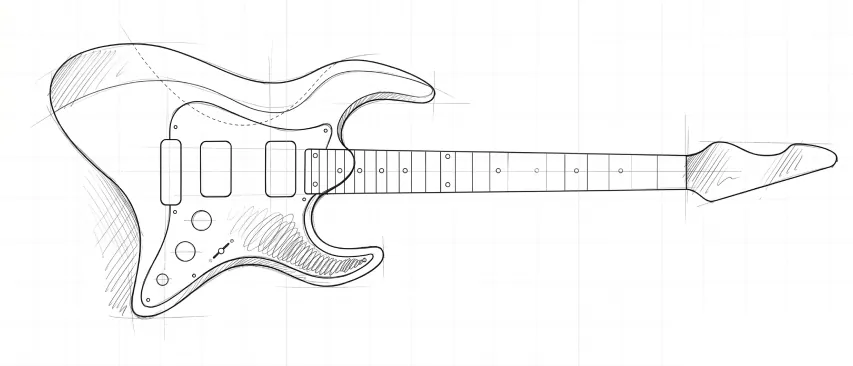
The early versions look like ergonomic guitars: angular, with the horns pulled far apart. By Version 12 the outline has come back toward the Stratocaster, with a sculpted lower bout.
Seven studies. One body.
The last stage of iteration happened inside the framework. Scroll slowly: the silhouette on the right follows the numbers on the left. The last study, R07, is the one that went to CAD.
A silhouette on its own
R01, the first framework study in my design file. By itself it is just a drawing. Nothing says which parts of it matter.
for this study
The last stage of iteration, in the order the studies sit in the design file. Widths and lengths in drawing units.
Ergonomic at the tail. Heritage at the horns.
The tail axis of the chosen study leans 23.8°, close to the headless design’s 28.7°. Its horn axis, at −16.1°, sits next to the Stratocaster’s −17.1°.
The tail borrows its lean from ergonomic guitars. The horns keep a heritage angle.
Angles measured from my own axis drawings: the reference guitars on the research board and the R07 framework. Tail · waist · horns.
Draw → Build → Feel
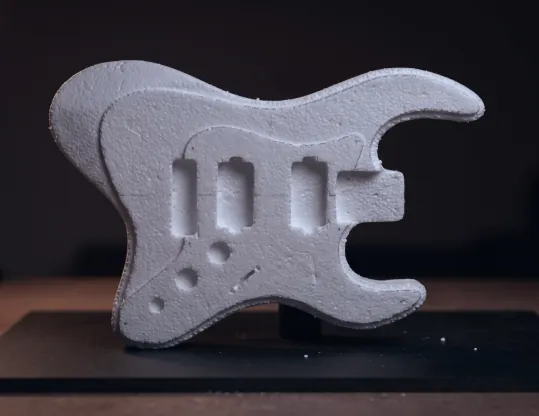
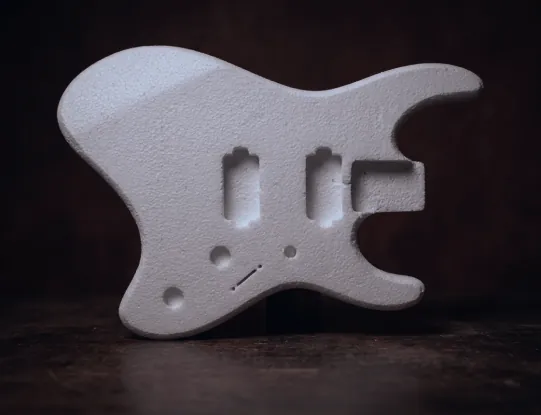
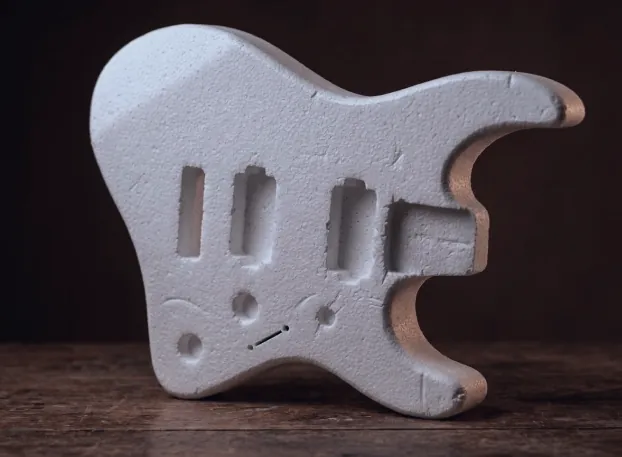
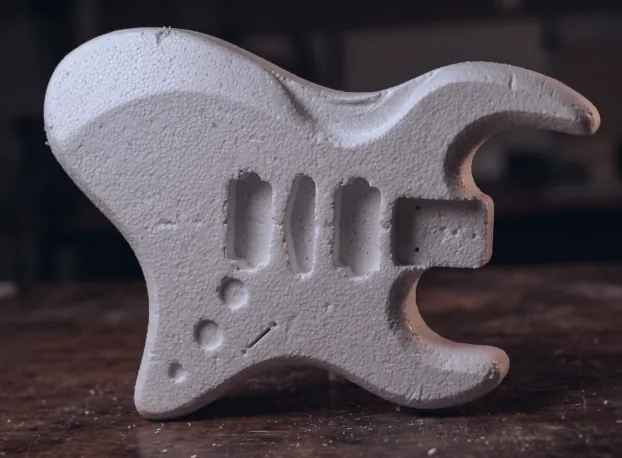
A contour carved into the top edge.
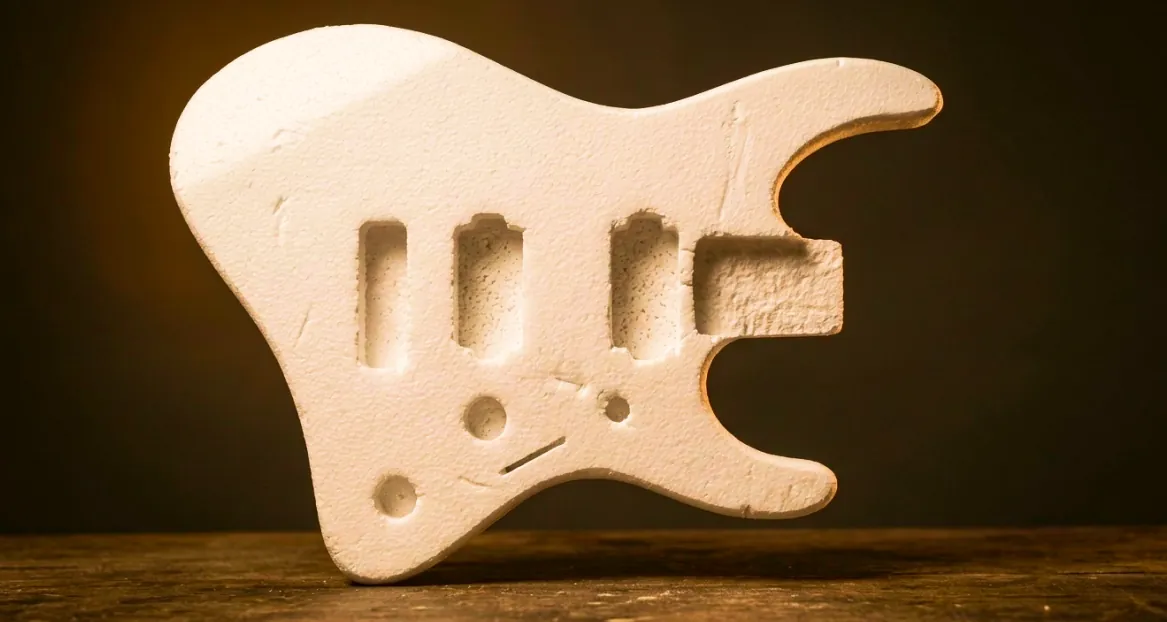
In informal sessions, guitarists from Octaves, IIT Guwahati’s music club, found this shape the most comfortable in flamenco and classical playing positions.
The screen wasn’t the final judge. The body was.
Making the guitar
The design had to survive contact with wood, steel, wire and a machine that didn’t work when I found it.
From outline to a build-ready instrument.
In Fusion 360 the chosen study, the sketches and the prototypes became one precise design. Fretboard scallop depth, hardware placement, body contours and neck balance were each set to a measured value.
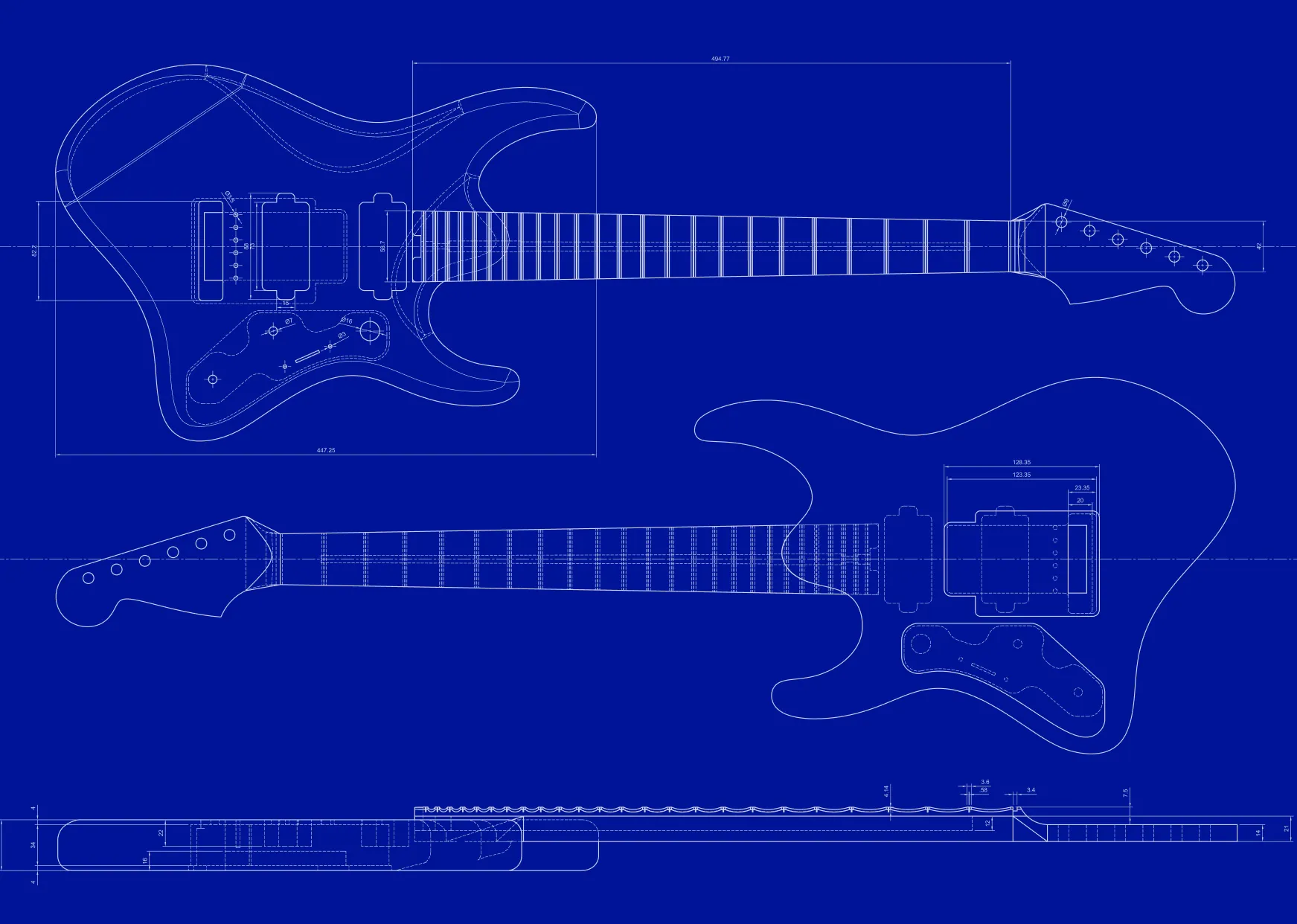
Drawing set: front, rear, and a side section through the neck. The scallops are visible along the top of the fretboard.
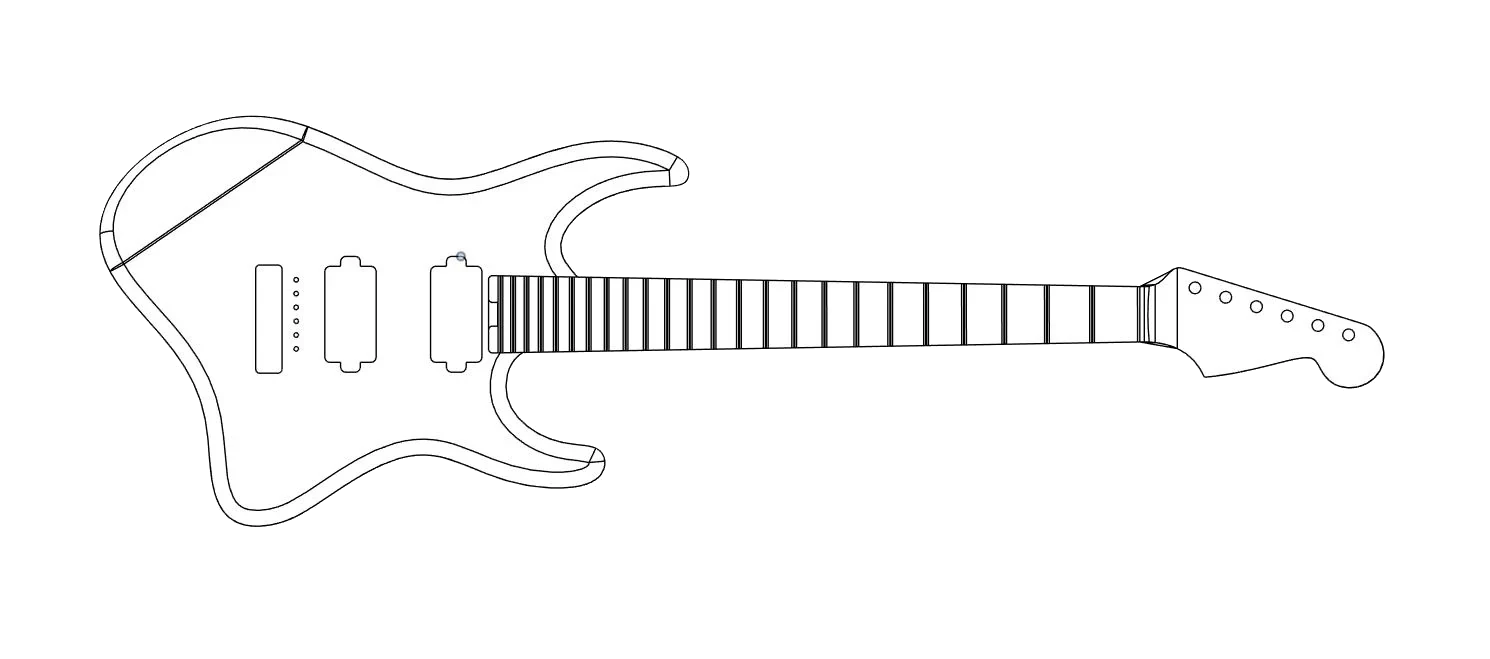
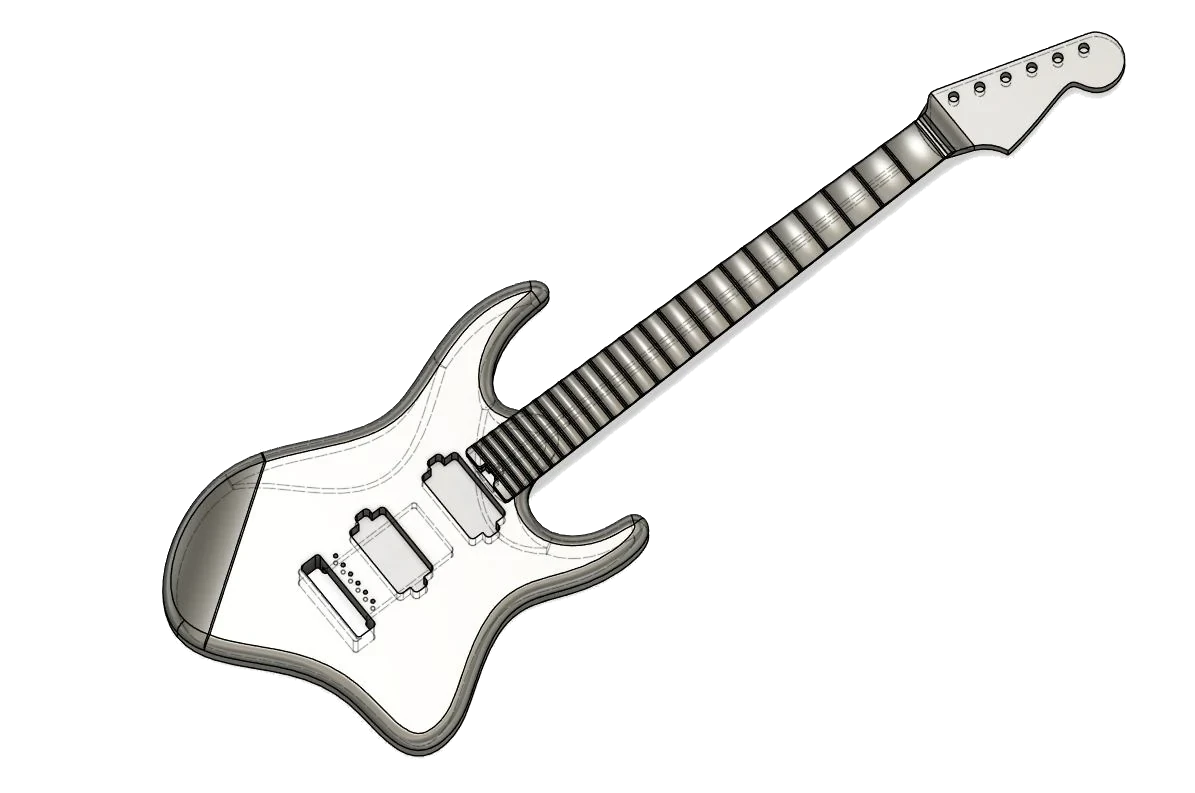
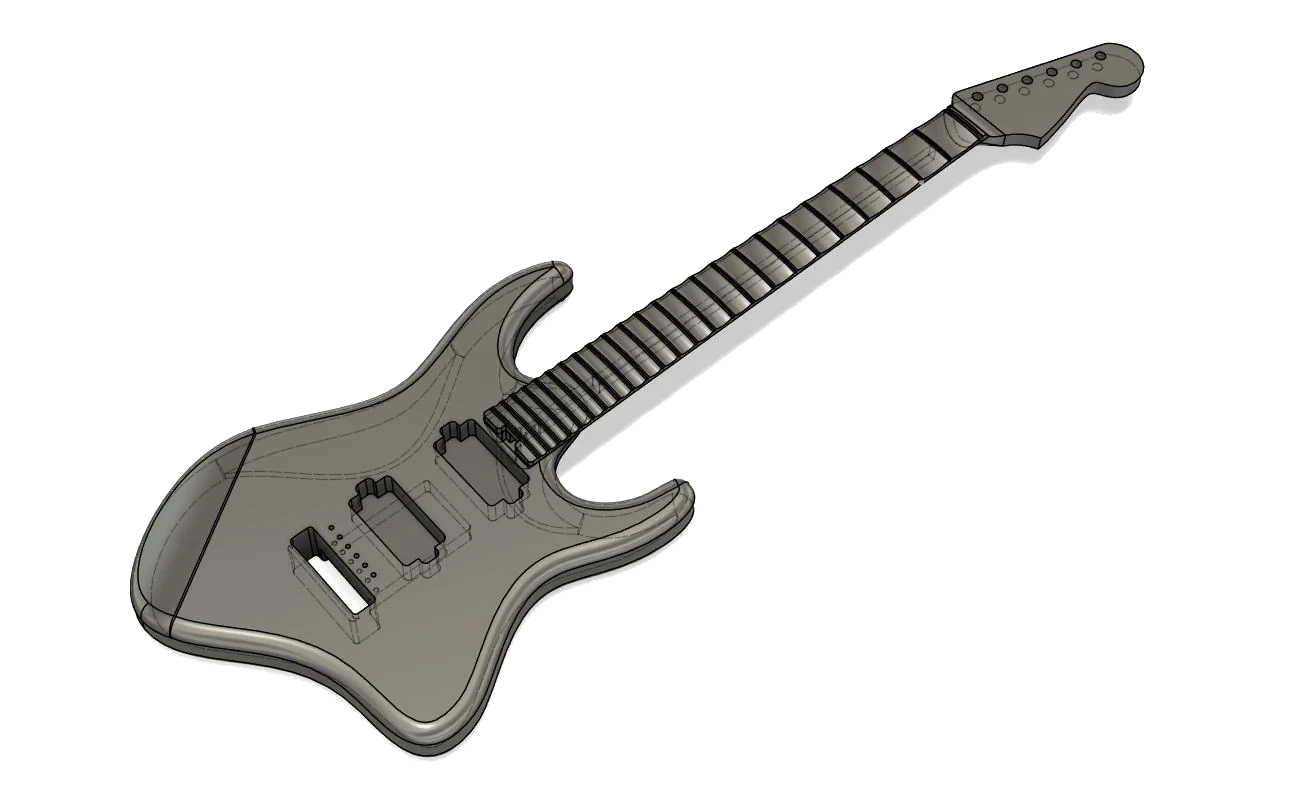
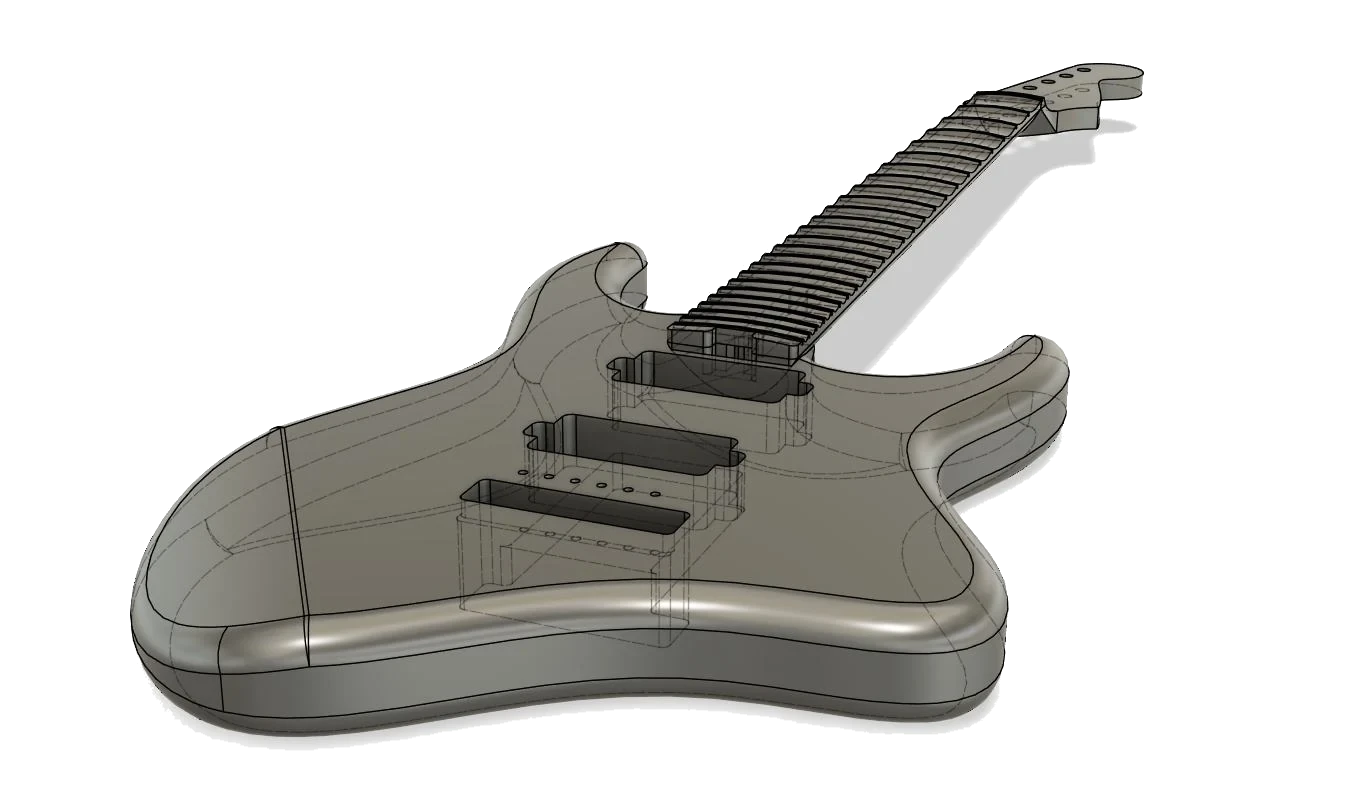
The neck is where the technical work happens.
It has to hold pitch as close to perfect as possible, and still be as comfortable as the body around it.
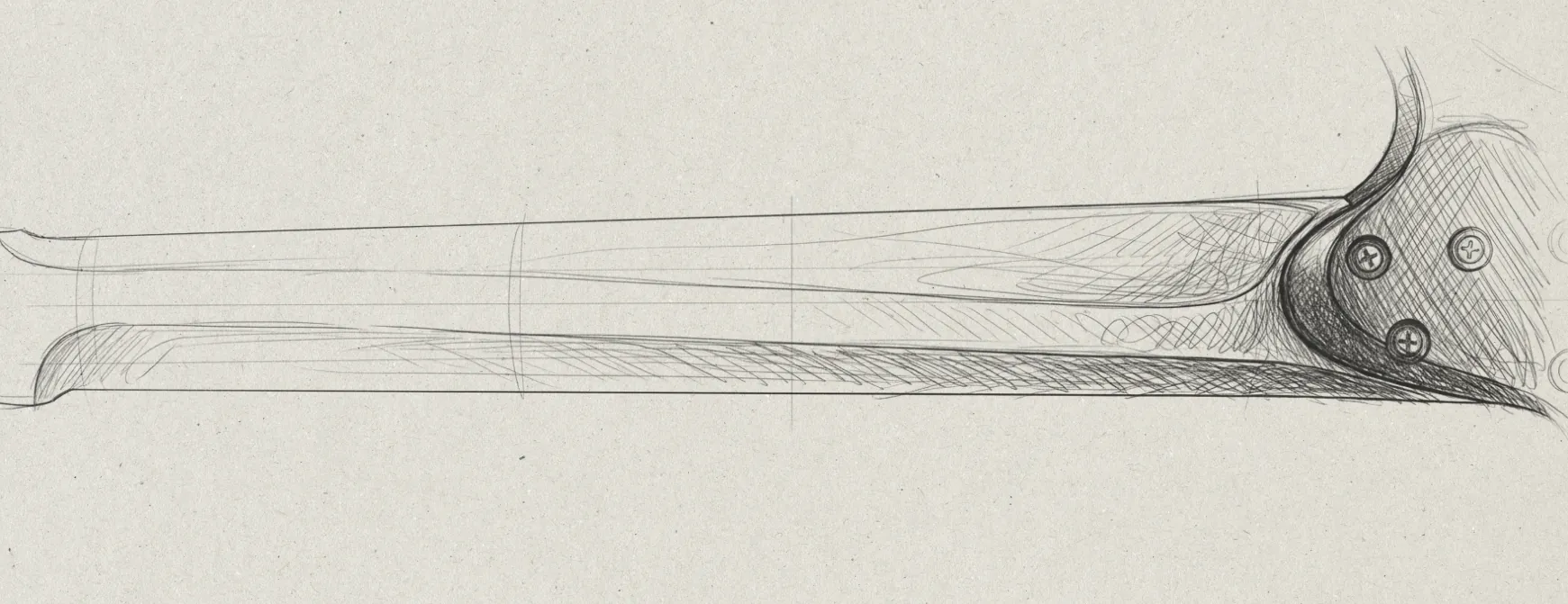
A flat, angled neck profile. Meant to give the thumb a more restful grip and keep the wrist straighter.
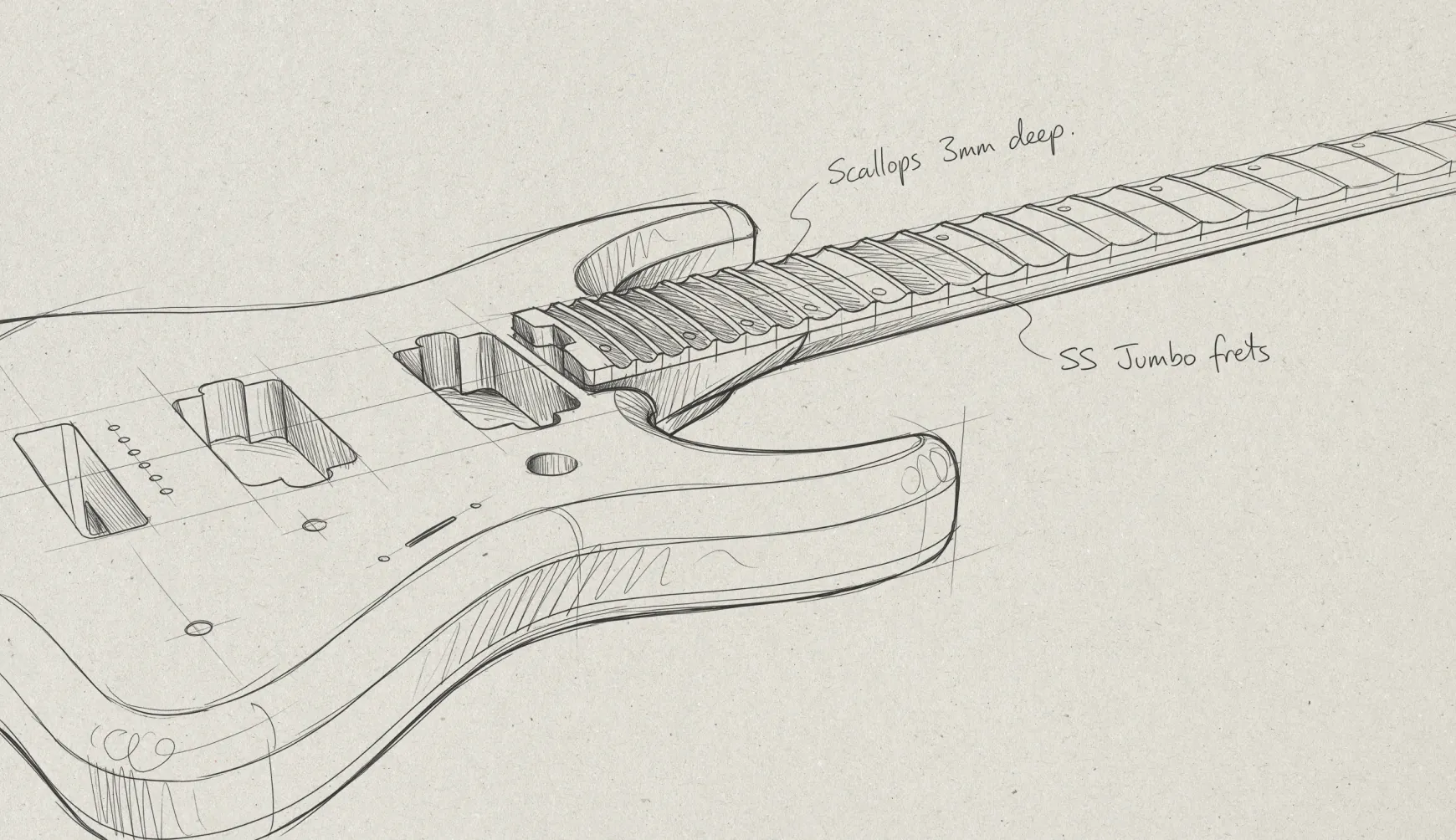
Scallops 3 mm deep between stainless-steel jumbo frets. Meant to reduce fingertip contact with the board and encourage a lighter fretting touch.
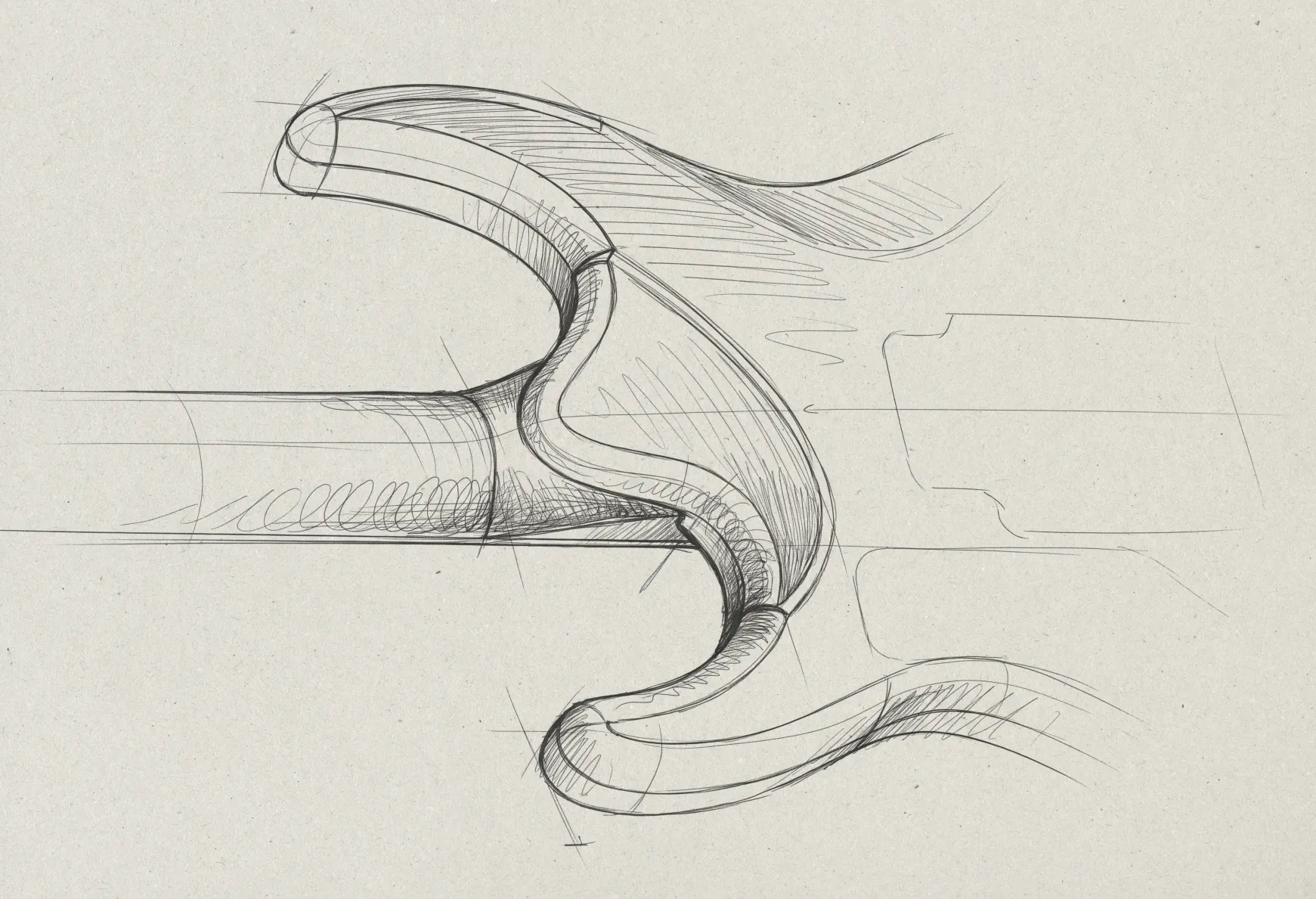
Meant to take away the physical barriers between the hand and the upper frets.
- Body
- Ash
- Neck
- Maple
- Fretboard
- Rosewood
Finding suitable wood took many calls and a lot of shipping. Then came the blank, the neck and the fretboard.
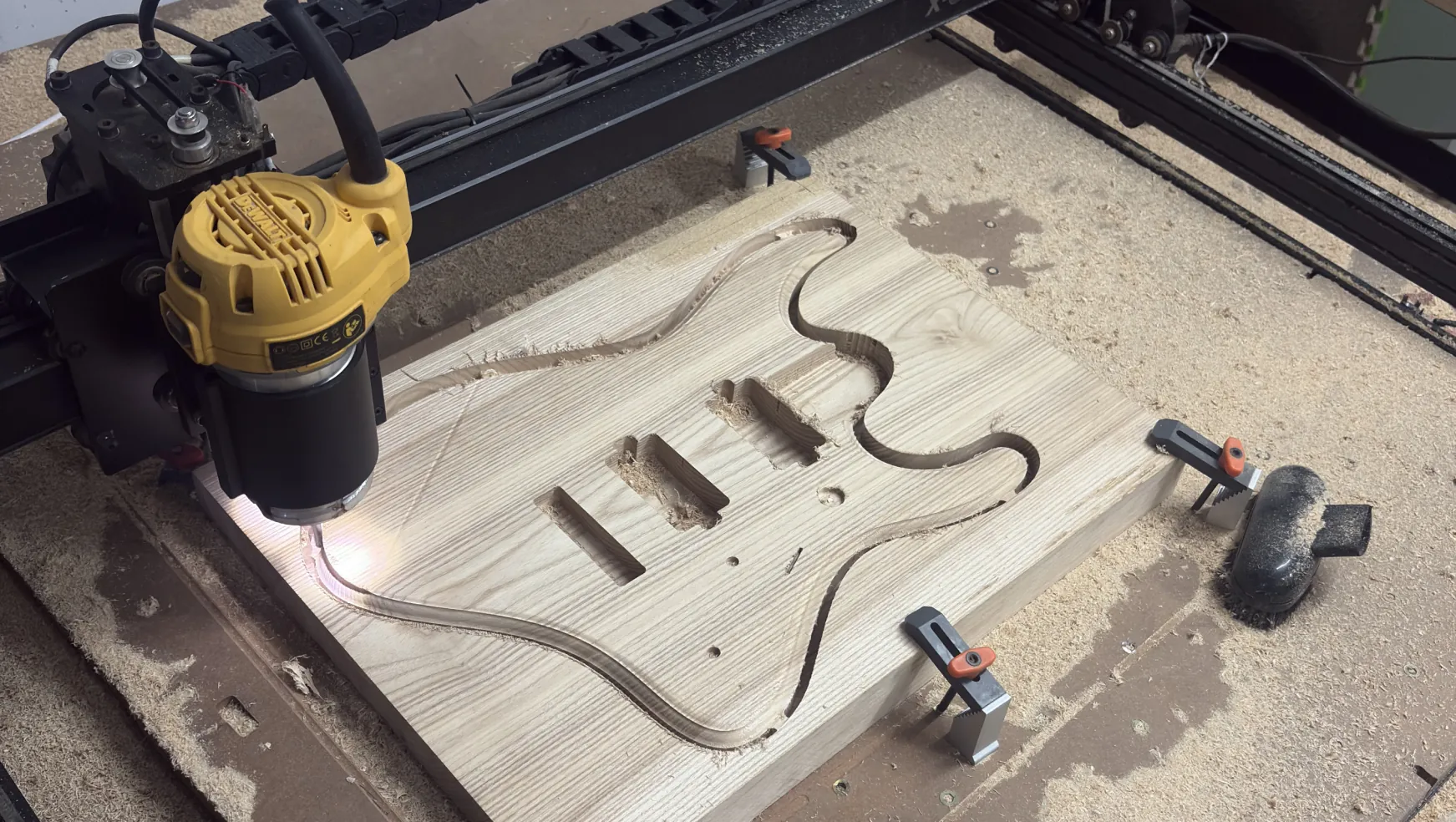
I had access to a broken CNC. I fixed it, loaded the toolpath and pushed the right buttons.
“I spent the next month in a workshop. Coils of wood shavings covered the floor. Tiny particles of ash hung in the sunlight shining through the little window.”
The part you never see.
Tone depends on a long list of variables. I wound the pickups myself.
- 01Number of turns
- 02Wire thickness
- 03Density of turns
- 04Distribution of turns
- 05Magnet strength
- 06Magnet type
- 07Slug material
- 08Slug thickness
- 09Bobbin type
- 10Pickup type
- 11Gap to the strings
- 12Position
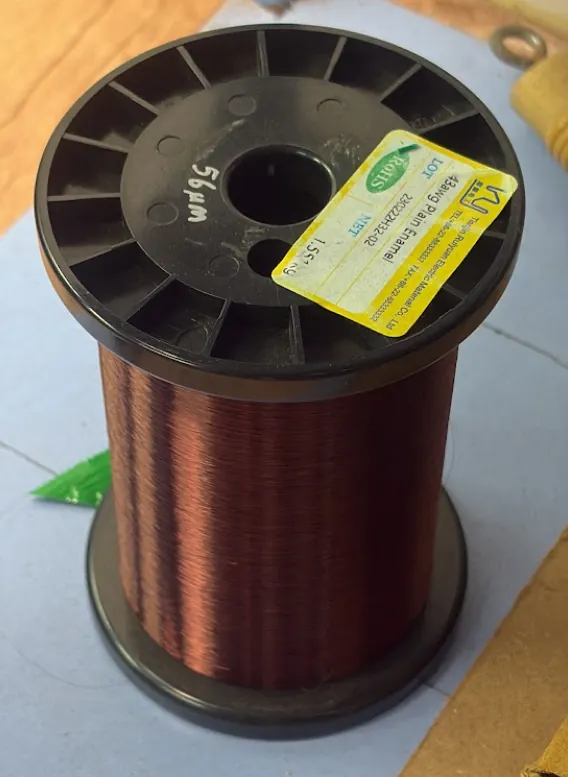 01Wire
43 AWG enamelled copper, as labelled on the spool.
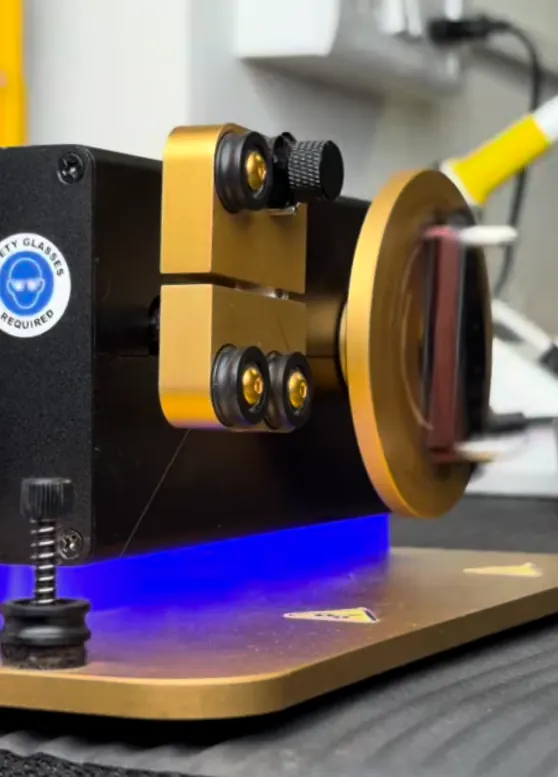 02Winding
The bobbin on the winder.
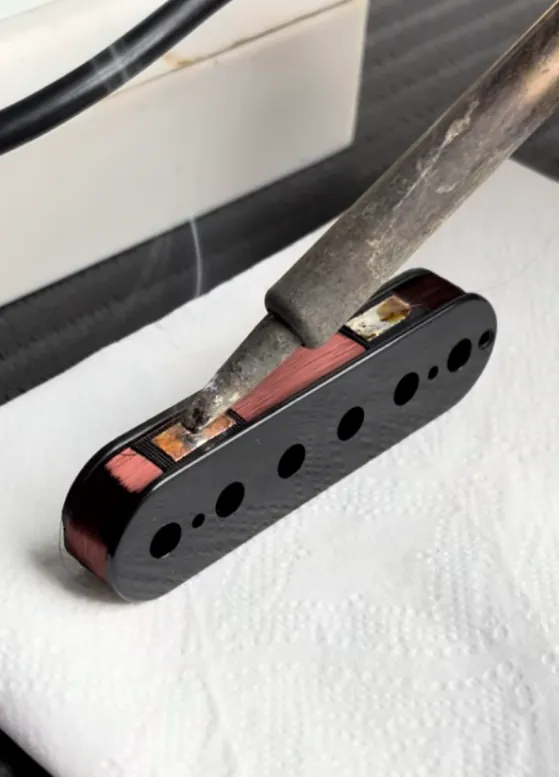 03Leads
Soldering the coil ends.
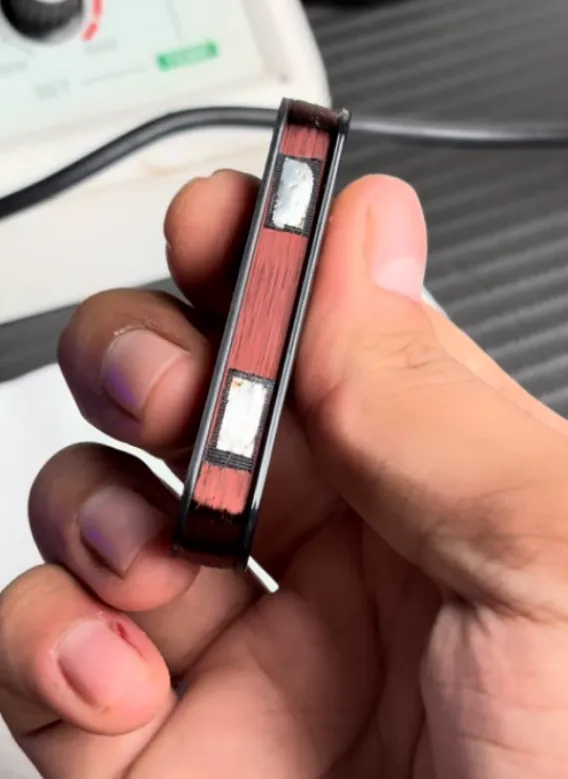 04Coil
A wound bobbin.
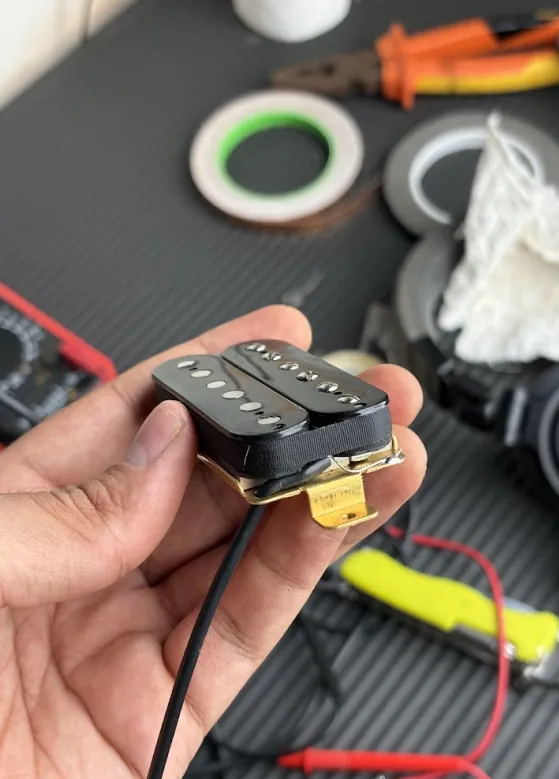 05Assembly
Two coils, one humbucker.
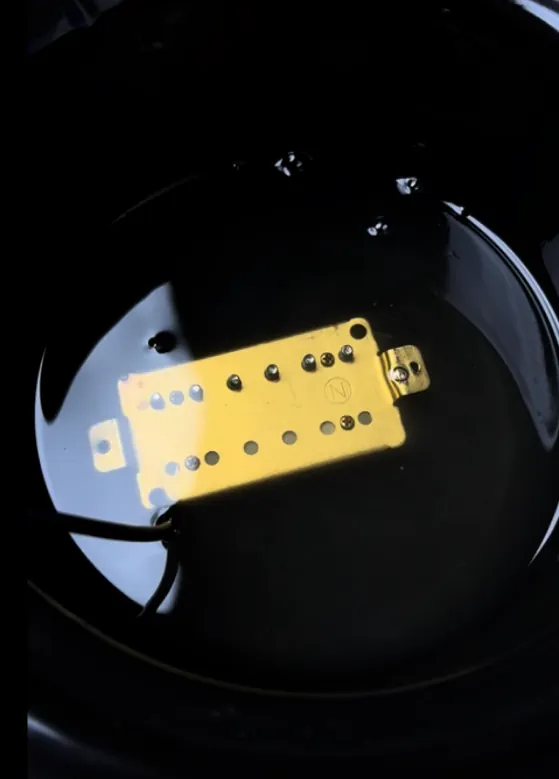 06Potting
Into melted wax.
After winding, each pickup is wax potted: dipped in melted wax that fills the empty spaces, locks the wire in place and keeps moisture out. Loose coils vibrate at high volume and squeal. Potting stops that microphonic feedback.
Put it in their hands
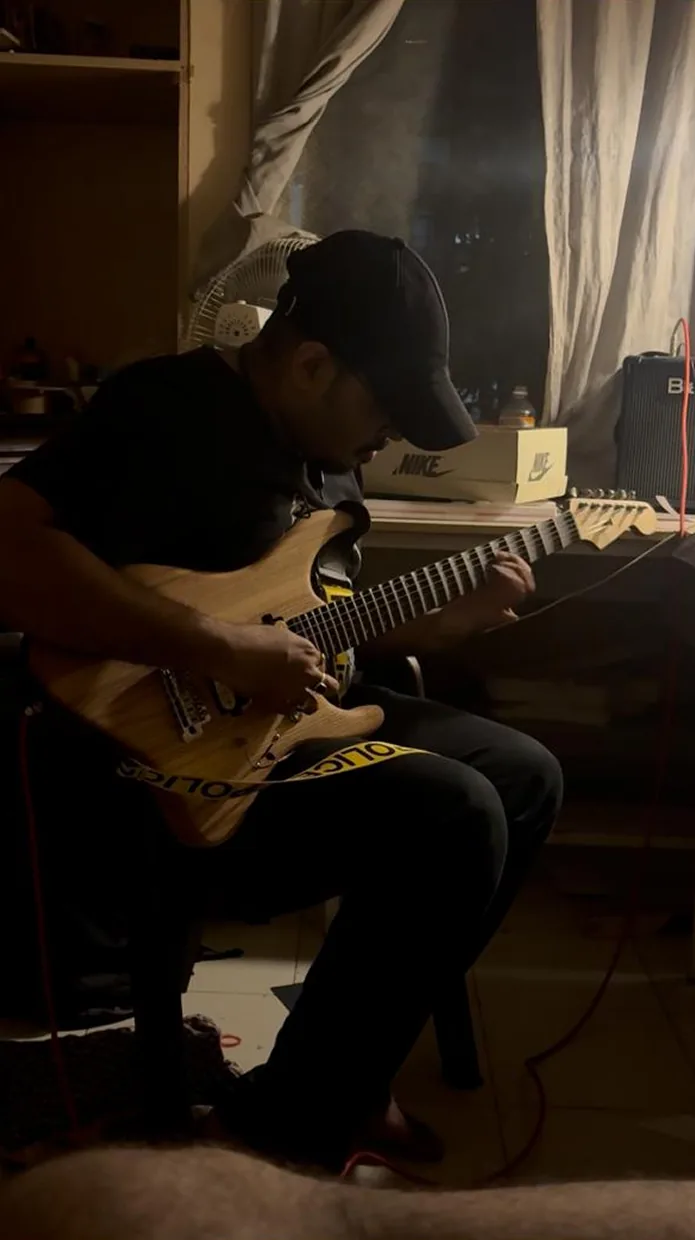
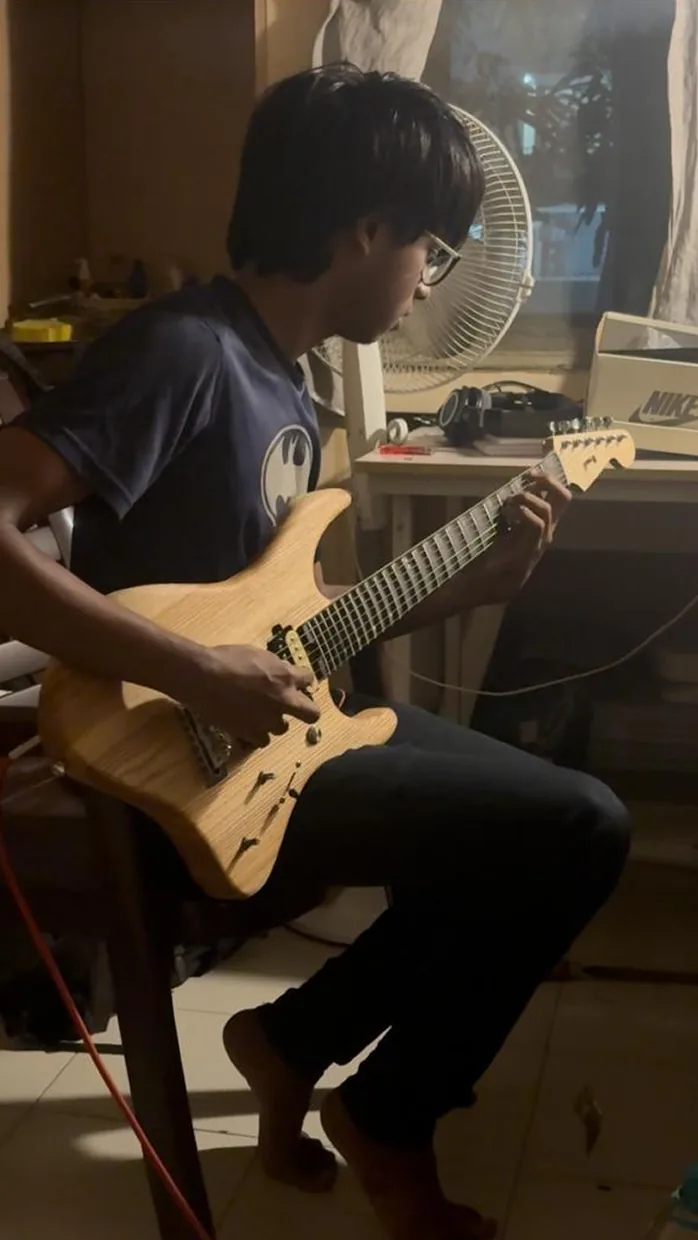
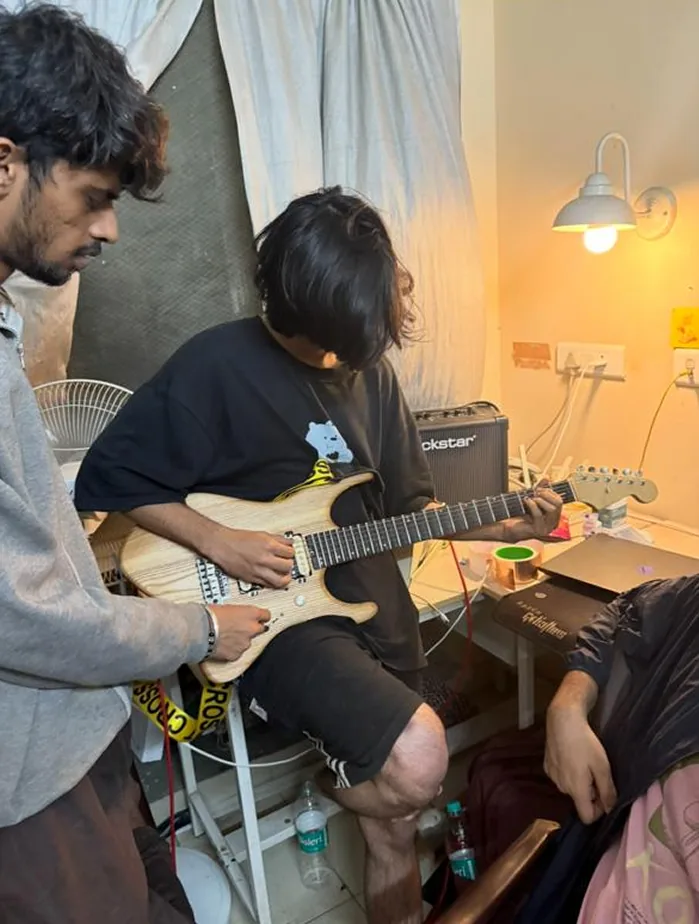
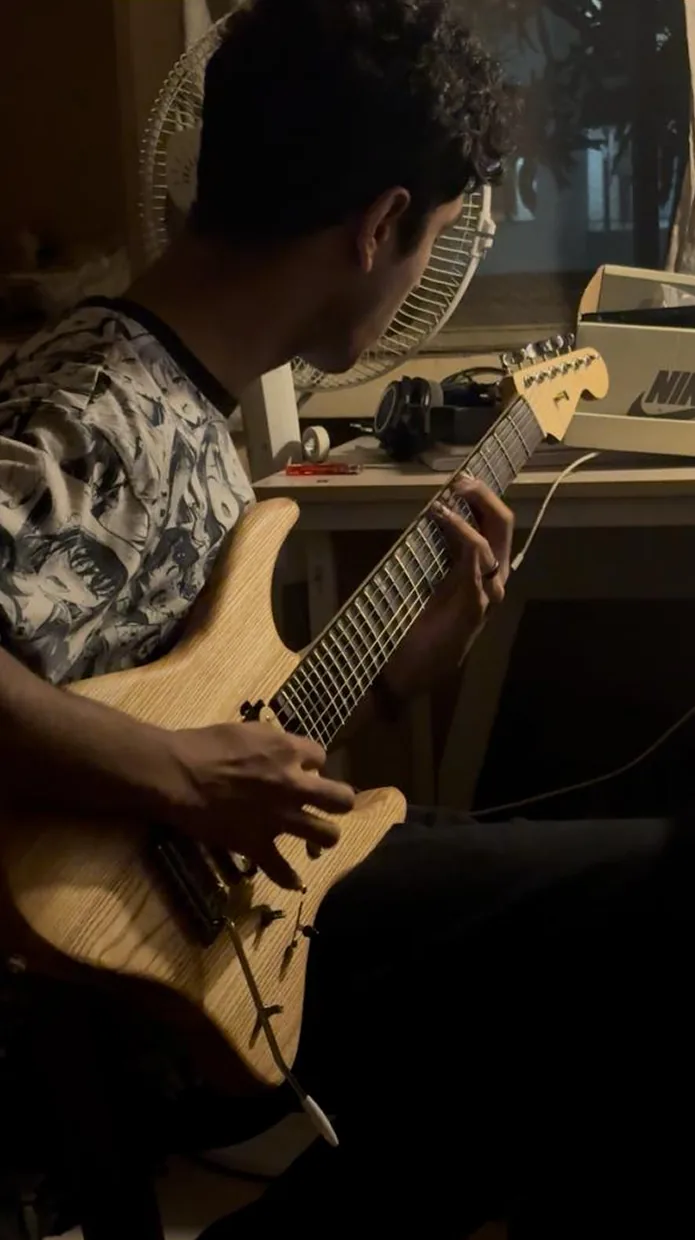
Octaves is IIT Guwahati’s music club. Its guitarists sat down with Solic Arc, stood up with it, and played.
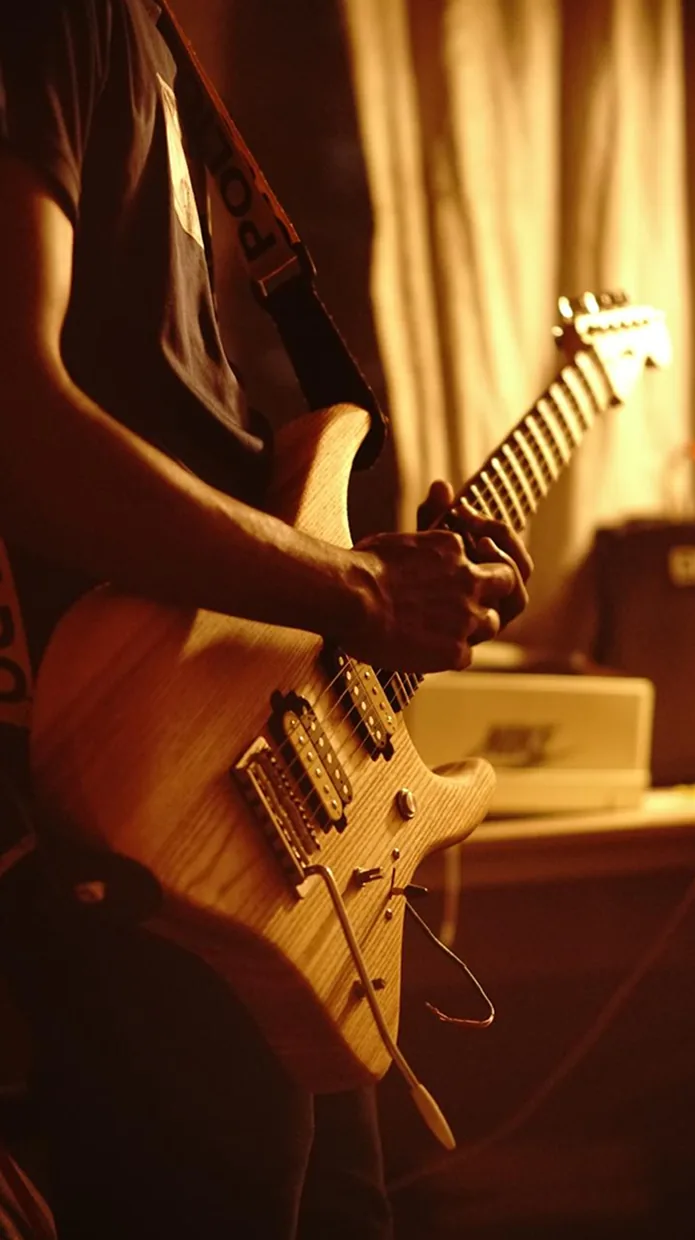
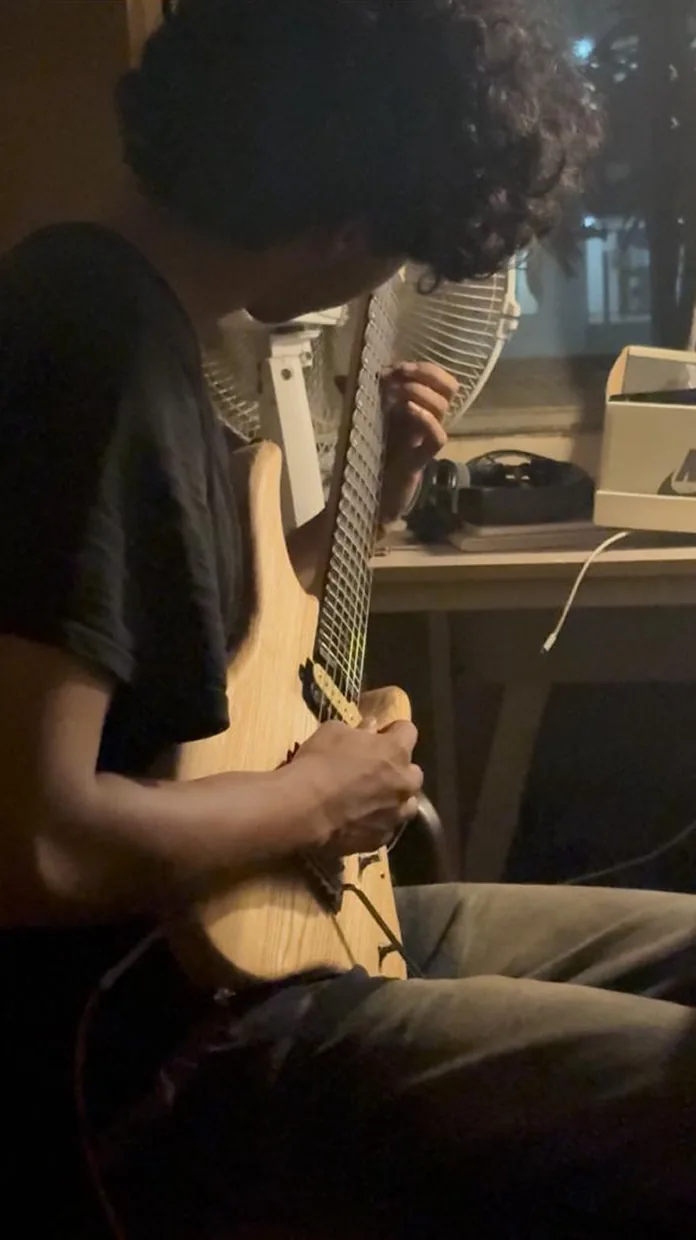
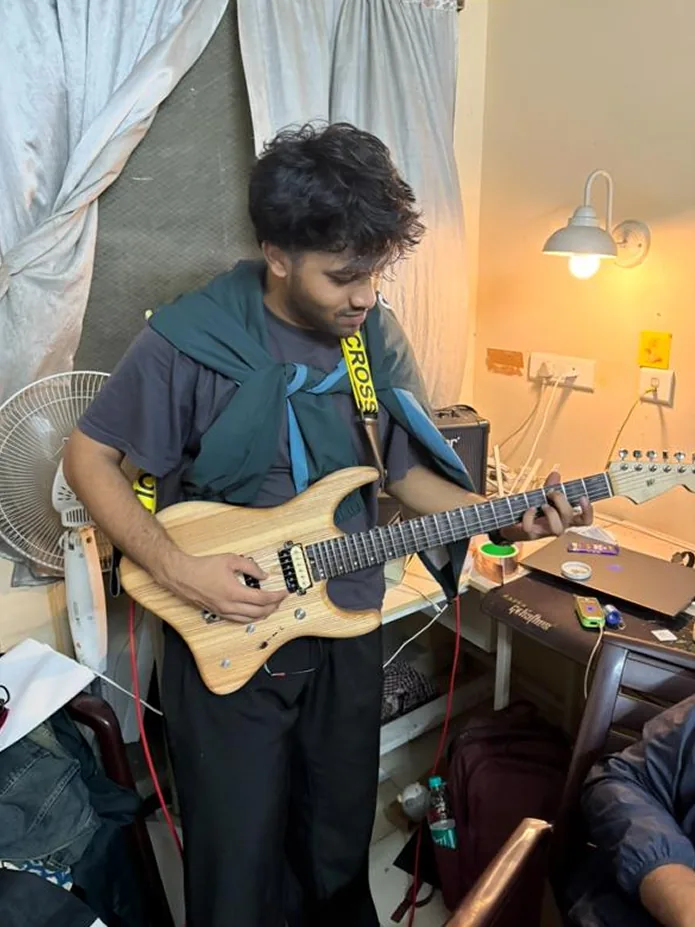
What players talked about: the shape, and how it felt sitting and in other positions.
The sessions were informal. Nothing was recorded or measured, and a handful of players don’t speak for every guitarist. I read it as a first reaction, not as validation.

The instrument
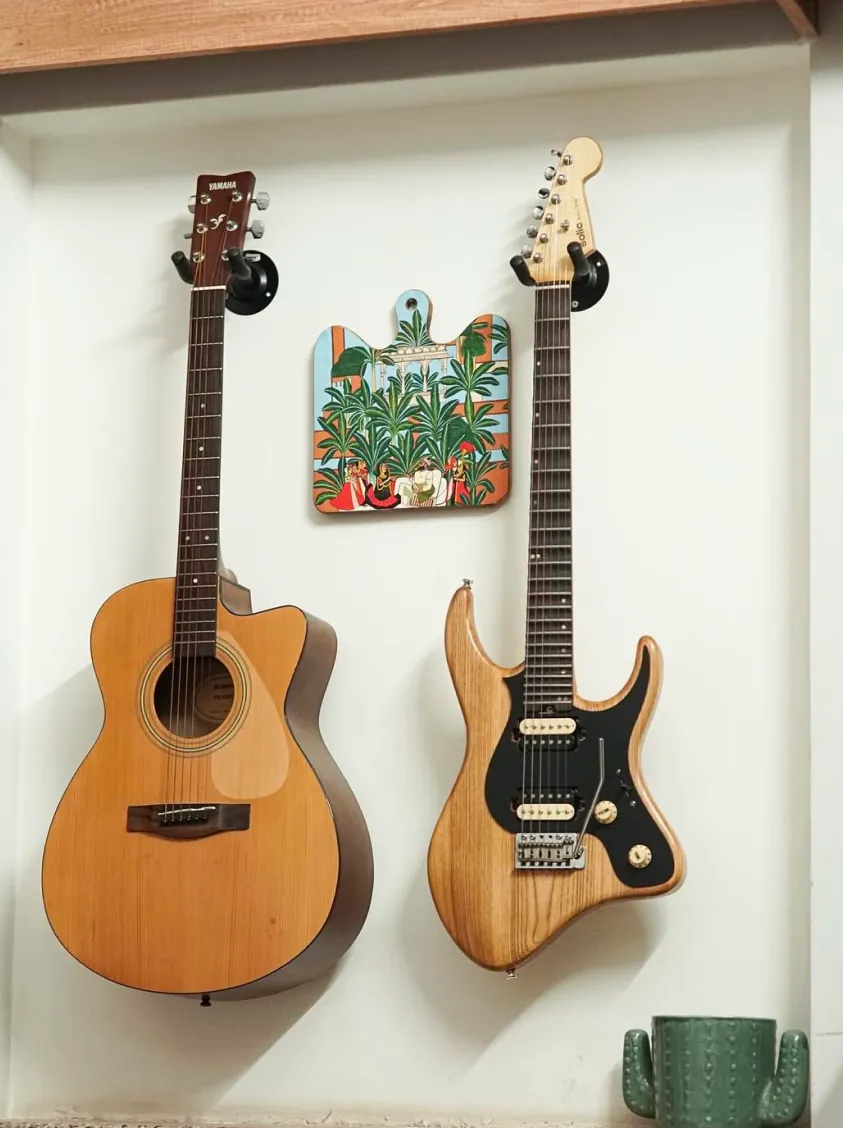
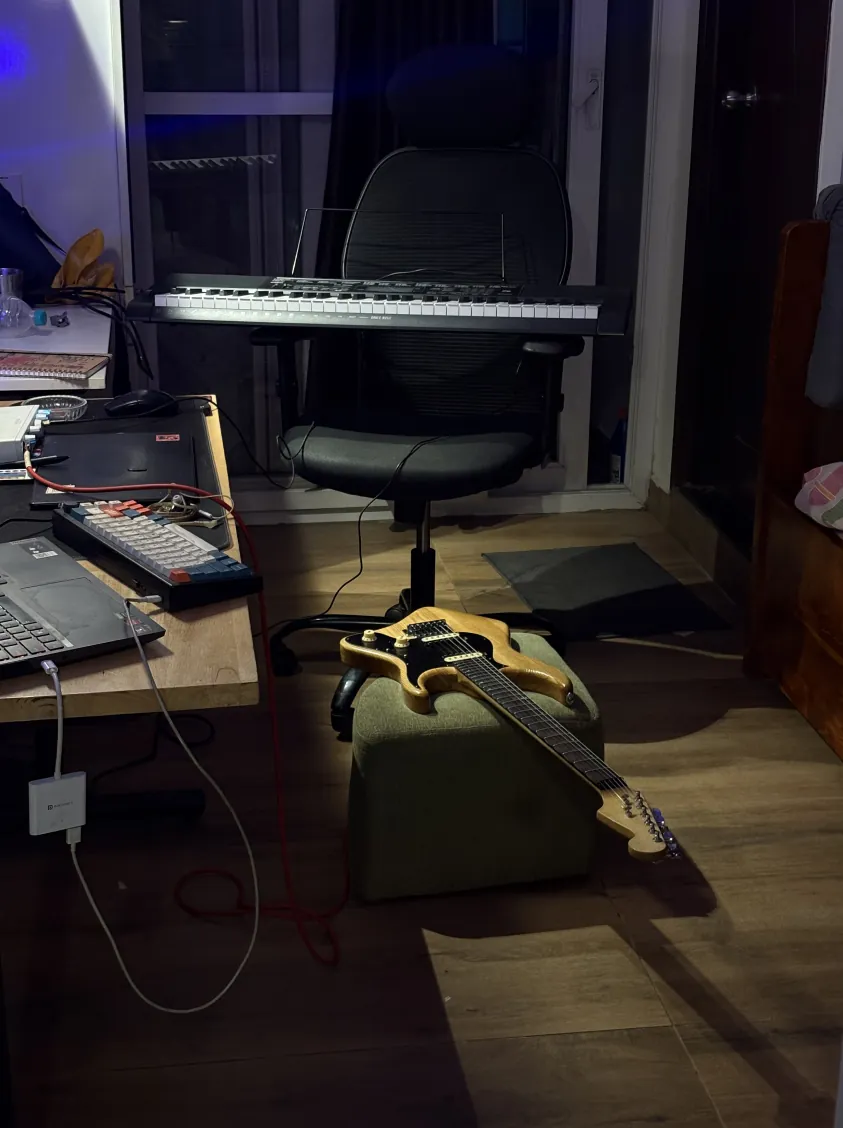
An ergonomic electric guitar, built around the player without abandoning the language of the guitar.
- Body
- Ash, quartersawn
- Neck
- Maple, quartersawn · flat, angled profile
- Fretboard
- Rosewood, quartersawn
- Scale length
- 25.5 in
- Frets
- 24 · stainless-steel jumbo
- Pickups
- Two custom-wound humbuckers
- Bridge
- Wilkinson vintage-style
- Pickguard
- Carbon fibre
- Headstock
- Strat-style
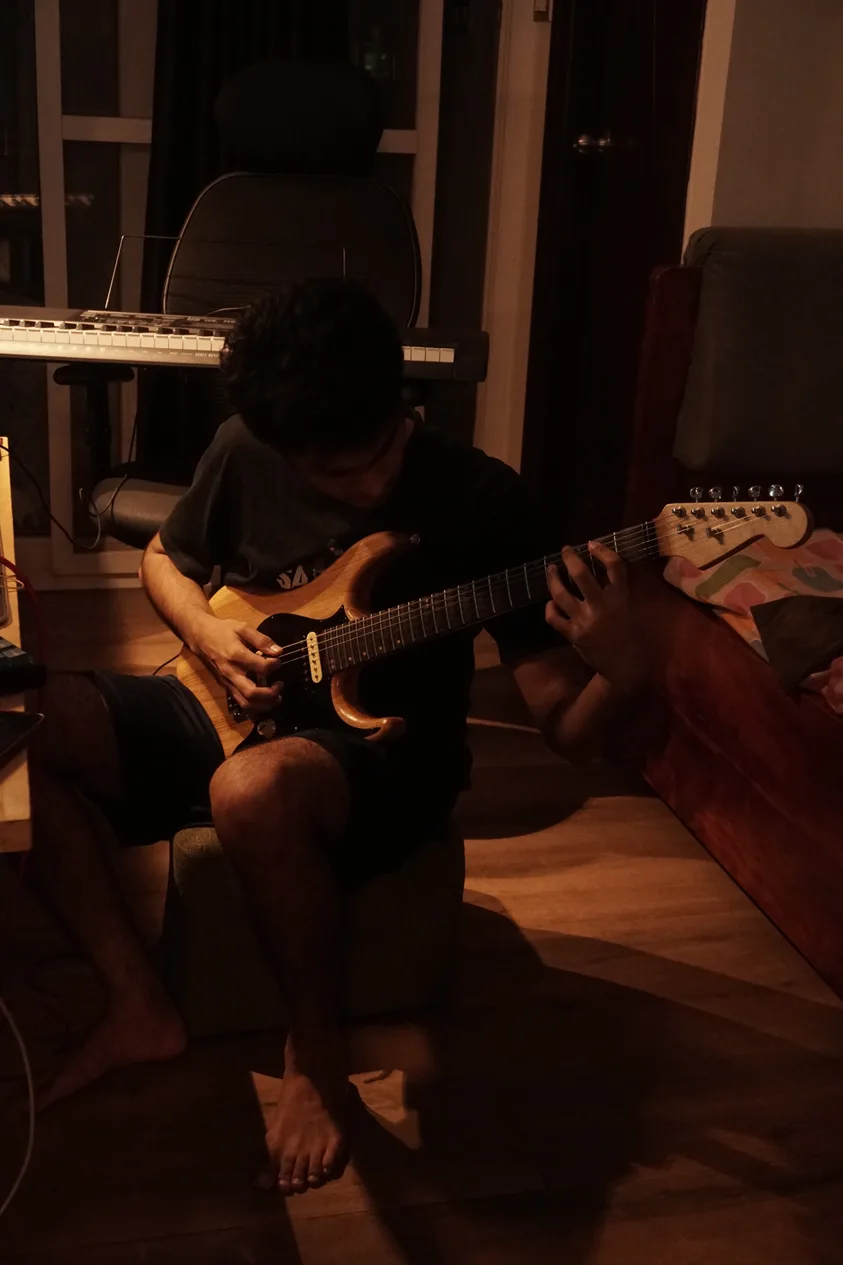
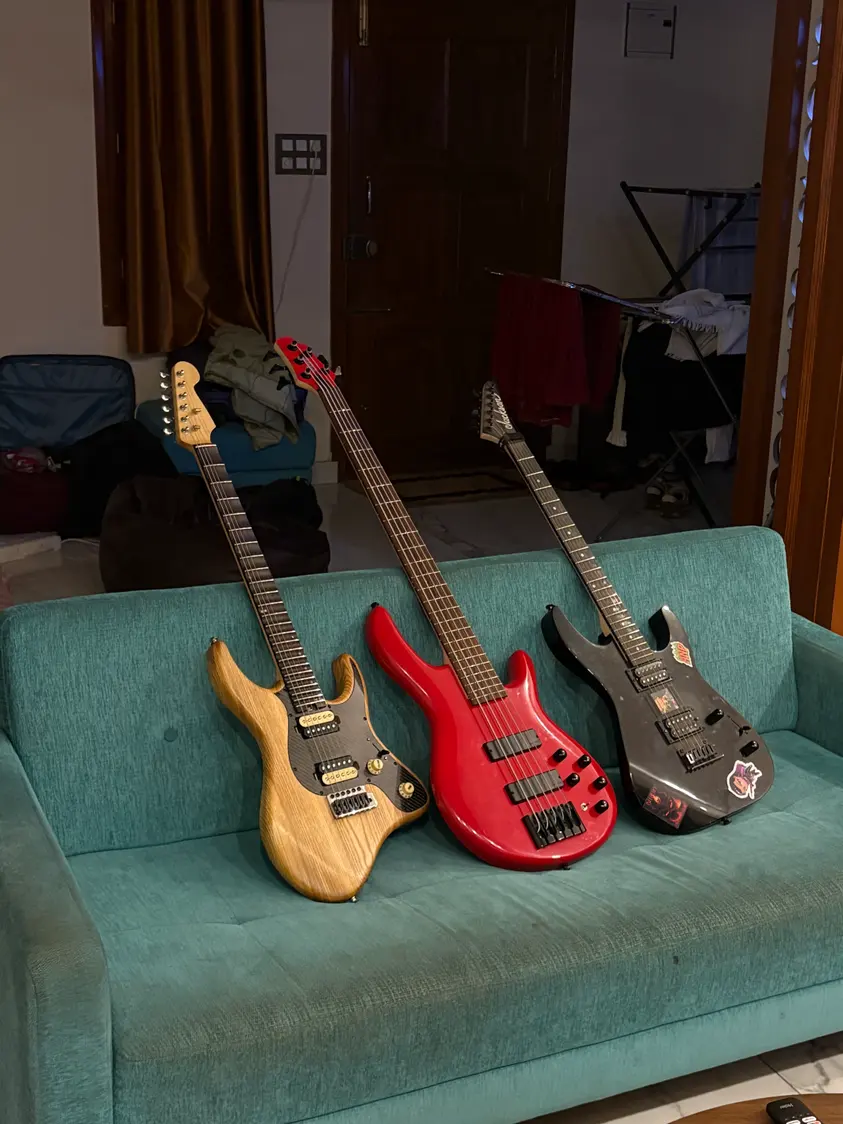
The real one, at home.
Adding curves was the easy part.
The work was changing how a player meets the guitar while keeping what made them want to pick one up.
People
× Products
Players shaped the question. The guitar is the answer I could build. Systems still ran underneath: a borrowed framework for shape, and a loop for testing it against the body.